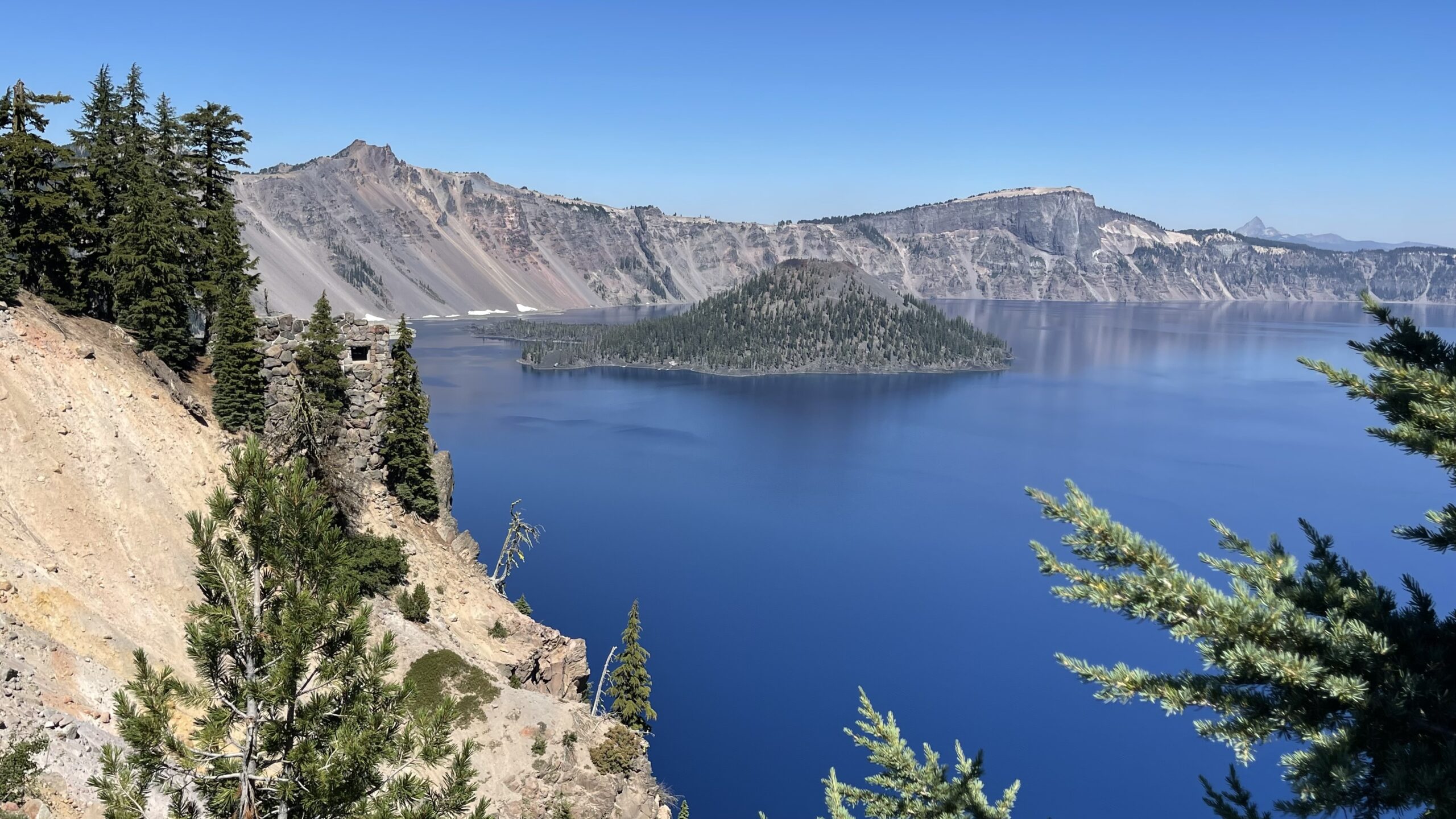
It has been said that the pristine and pure clarity of the waters of Crater Lake produce the darkest and most vibrant blue hues of anywhere on earth. Indeed I found this to be true. I could look out over this volcanic crater lake forever with its deep dark blue color that somehow mesmerizes you into a trance of pure awe. So much to see and appreciate here in Oregon from its natural beauties to its vibrant downtown city life. So let’s get into it!
Wilsonville, OR
My first stop in Oregon takes me to Wilsonville – a town less than 20 miles south of Portland. That is my typical M-O, that is to stay away from the actual big cities and rather stay in the suburbs 15 or more miles away. That way, I can venture into the town to explore as I see fit, without having to deal with all the traffic and people each and every day. Besides, there are few campgrounds that actually exist in the downtown big cities anyway. So, it’s a win-win.
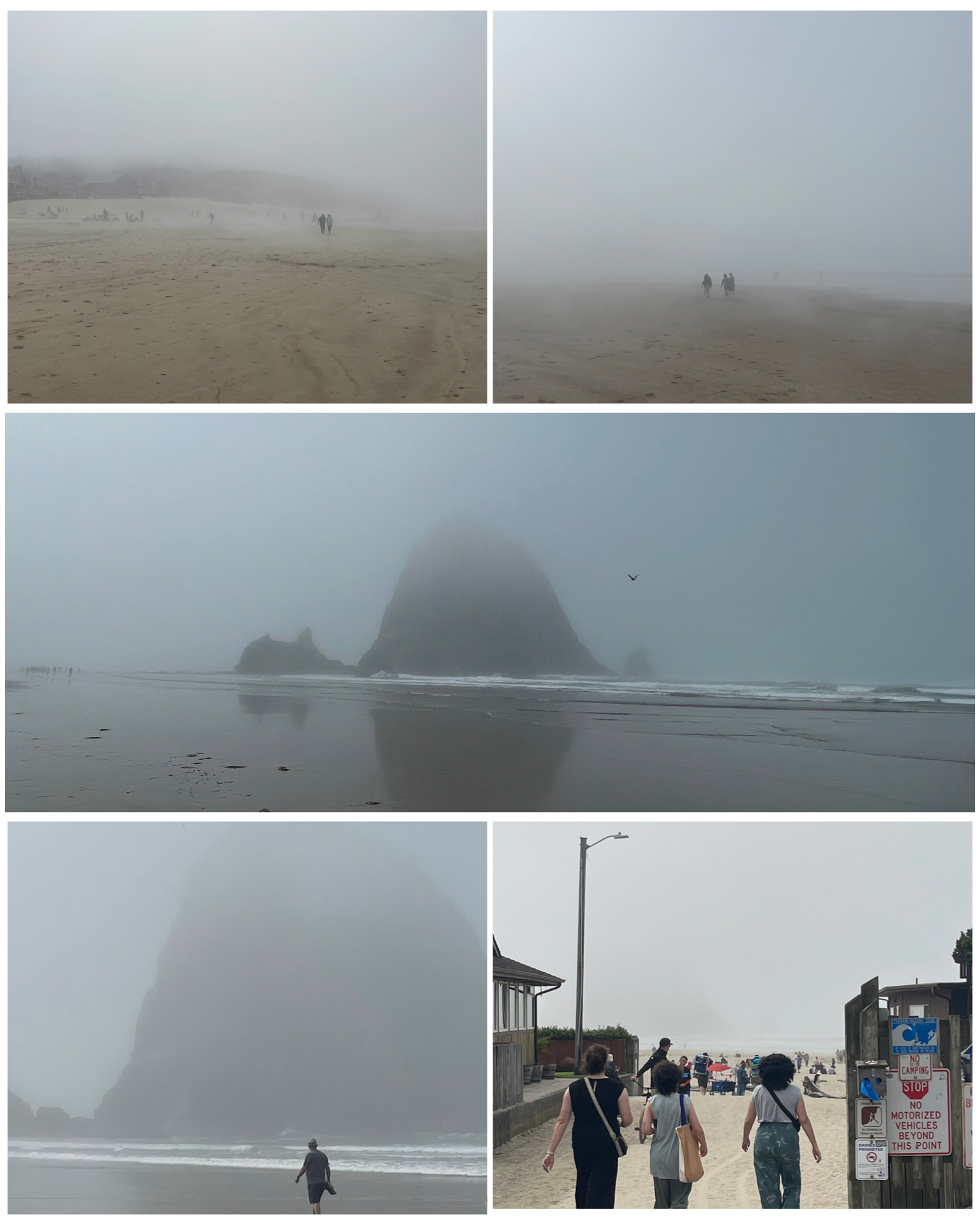 Go to Cannon Beach they said! It’s beautiful there with amazing oceanside rock formations they said! So, I took their recommendations and on my first full day in the area I opted to make the 90 mile, almost 2 hour trek to get there. It was a beautiful blue sky sunny day when I left, and likewise for virtually all of my drive up there. But, once I got on the actual beach – totally fogged in! As I walked along the shores, I could hardly see 25 feet in front of me. When I arrived near the famous landscape known as Haystack Rock, it was barely visible through all the dense fog. I couldn’t believe it! Just a few hundred yards off the ocean was pretty clear, yet here by the water, it was an almost total white out. So, I walked along the wet sand and did my best to grab some pictures of the area – despite the limited visibility. I was hopeful that the fog would soon burn off and I could get some better views of this iconic beach. It was just afternoon by now, and I had not yet had lunch. So, I figured if I walked back into town, had a nice leisurely lunch, I could then hop back on the beach thereafter and all would be good. So, that is what I did. I had a terrific lunch oceanside, followed by a walk around town. I even walked through a parking lot sized farmers market to kill some more time. But alas after using upwards of a couple hours with that activity, as you can see from the last picture I took (at left, bottom right), there was still a dense fog present. So, it was looking like this day was going to be a total wash out. But, I did get to visit a very nice beach town, and did see, albeit somewhat obscured, the famous Haystack Rock. Well, better luck next time!
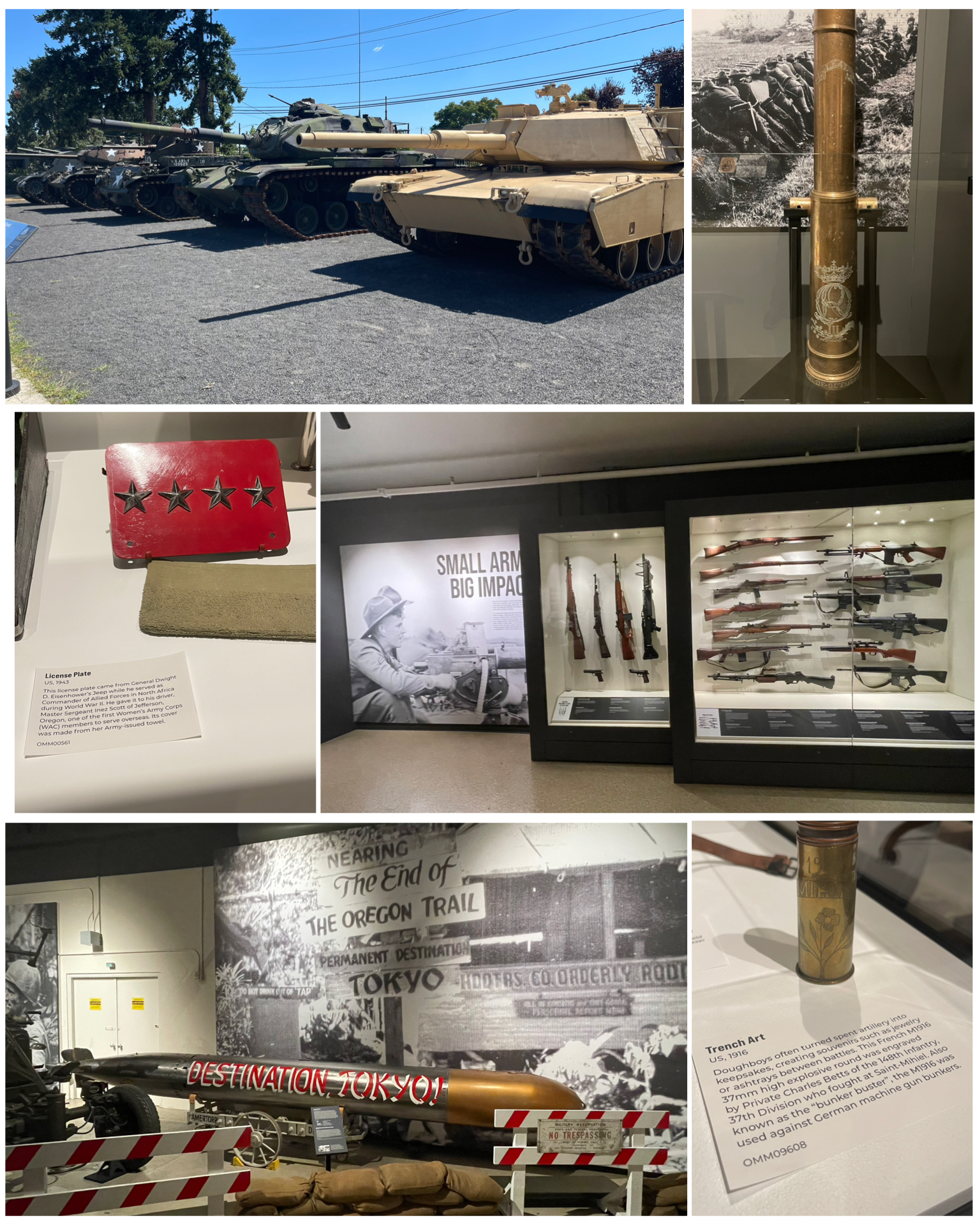 The next day I went chasing after some Roadside places. First up was a visit to the Oregon Military Museum located within the grounds of Camp Withycombe. Located in Clackamas, OR, just southeast of Portland, this facility was originally created as Camp Benson in 1909, but also known as the Clackamas Rifle Range. During WWI it served as a training center and supply depot, as well as headquarters of the National Guard. It’s firing ranges were top notch, and were extensively used by the U.S. Army, the U.S. Marine Corps, the Federal Bureau of Investigation, police, and even private civilians. Though the ranges have since been closed, it still serves as a training center and supply depot today, as well as being a repair facility. It also plays host to a really nice military museum. Lucky for me, it had just reopened last month after having been closed for upwards of 16 years. During that time, another building was being rehabbed and setup to be the new and improved museum. They did a really nice job! It is a well layed out museum, with artifacts going all the way back to the US Civil War. Among the many military pieces of harware including tanks, cannons, torpedos, and guns, I found these two items particularly interesting. First was the this license plate from General Dwight D. Eisenhower’s Jeep from when he served as the Commander of Allied F0rces in North Africa during WWII. Also in the museum was this 37mm ammunition round that had been engraved by an Army private. A popular activity of the soldiers during that time in turning used artillery into keepsake mementoes.
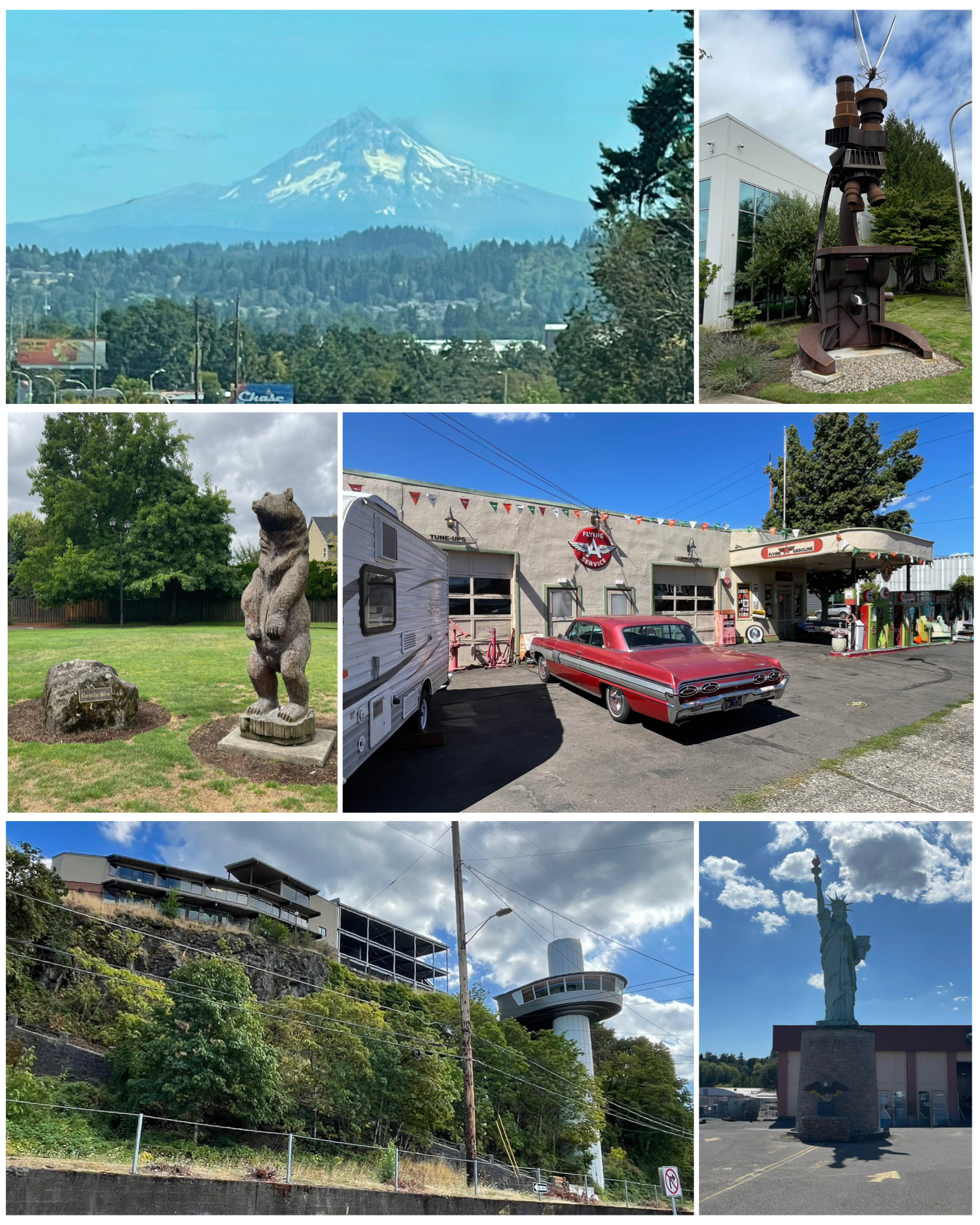 There were several Roadside attractions in this part of Oregon as well. First up was this giant replica of the Statue of Liberty. This was not one of the Boy Scouts varieties, but rather a much larger version at over 50 feet tall including her pedestal. She sits in the middle of a parking lot servicing a small strip mall, and was built and purchased in 2007 by the mall’s owner who is of Middle Eastern descent. He did so to show his love of America. Next up was this beautifully restored vintage Flying A gas station (at left, center right). There does not appear to be an operating business here now, but it was apparently once home to Cycle Express – an ATV accessories store. But it looks great complete with its original gas pumps and signage. Nicely done! Next I drove to Oregon City to visit the only vertical street in North America. This is the Oregon City Municipal Elevator (at left, bottom left) – believed to be the only municipal elevator in the country and one of only four in the world. It connects the lower city to the upper city being 90 feet up the side of a cliff. It was originally water-powered when it was built in 1915 but later upgraded to electric in 1954. Rides are reportedly free, and the views from the top observation tower are said to be quite nice. I didn’t, however, avail myself of that feature. Next up was a wood carving statue of a large bear. But this is no ordinary bear, it’s Gentle Ben from the 1960’s TV series of the same name. The original author was Wilsonville native Walt Morey who created the story of a bear and his human pal living life in Alaska. When Walt passed away his family donated some land for a small park here in his hometown, which is home to this 500-bound bear sculpture. I sure do remember watching that show as a kid growing up! Finally, the last item found in Wilsonville was this 23-foot giant microscope made of steel that sits in front of the Oregon Department of Agriculture’s entomology department. On the eyepiece is a nine-foot flying bug. This is pretty cool, and is a recent addition to the landscape having just recently been unveiled in Nov of 2024. Though not a Roadside item per say, it seemed everywhere I was driving throughout the area had this big beautiful white capped mountain in the distance. This would be Mt Hood – having a summit elevation of 11,249 ft. It’s located just 50 miles southeast from Portland, and definitely visible all throughout the area. Really nice!
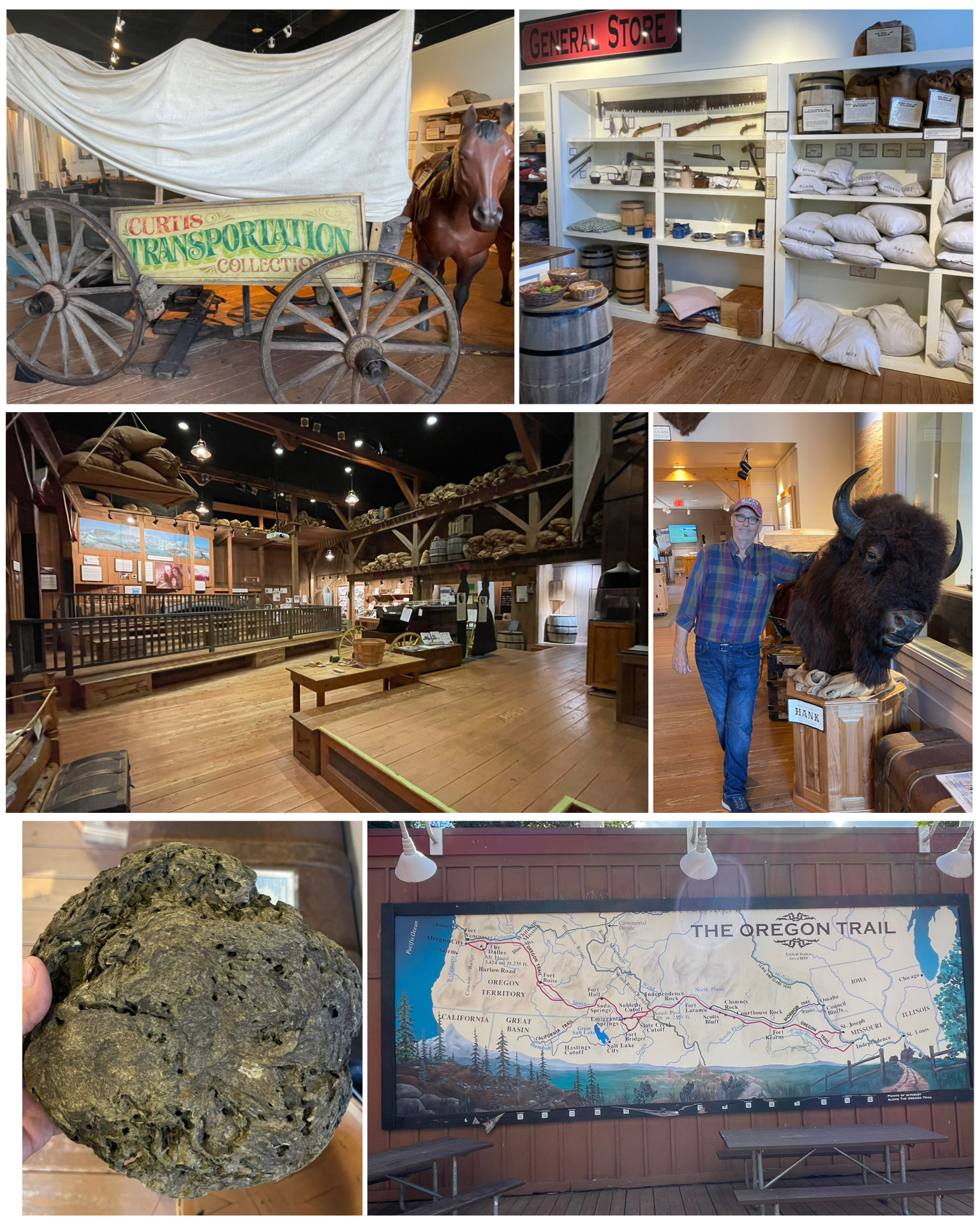 Also in Oregon City I visited what was reported to be the End of the Oregon Trail. There they have a nicely done interpretation center and museum. The Oregon trail is a 2,170-mile long route that provided wagons and migrating settlers a pathway from the Missouri River to the valleys of Oregon. This trail passed through Kansas, Nebraska, Wyoming, and Idaho, eventually landing in Oregon. The center was mostly focused on the “how” folks made their trek along the trail. First loading up their cart with food and other supplies, then enduring the painstakingly slow and sometimes treacherous pathway to the west. I sat through a 40 minute movie which did an excellent job of telling the story of what life on the trail was like for these early pioneers. They even had an actual wagon that had come over the trail back in the 1840s (at right, top left). Besides getting a selfie with Hank the Bison, and holding onto an actual buffalo chip (aka poop) that was used as fire fuel back in the day, it would be an interesting walk through time and through three giant buildings disigned to look like wagons, to get through all the history. It was certainly an interesting and educational stop.
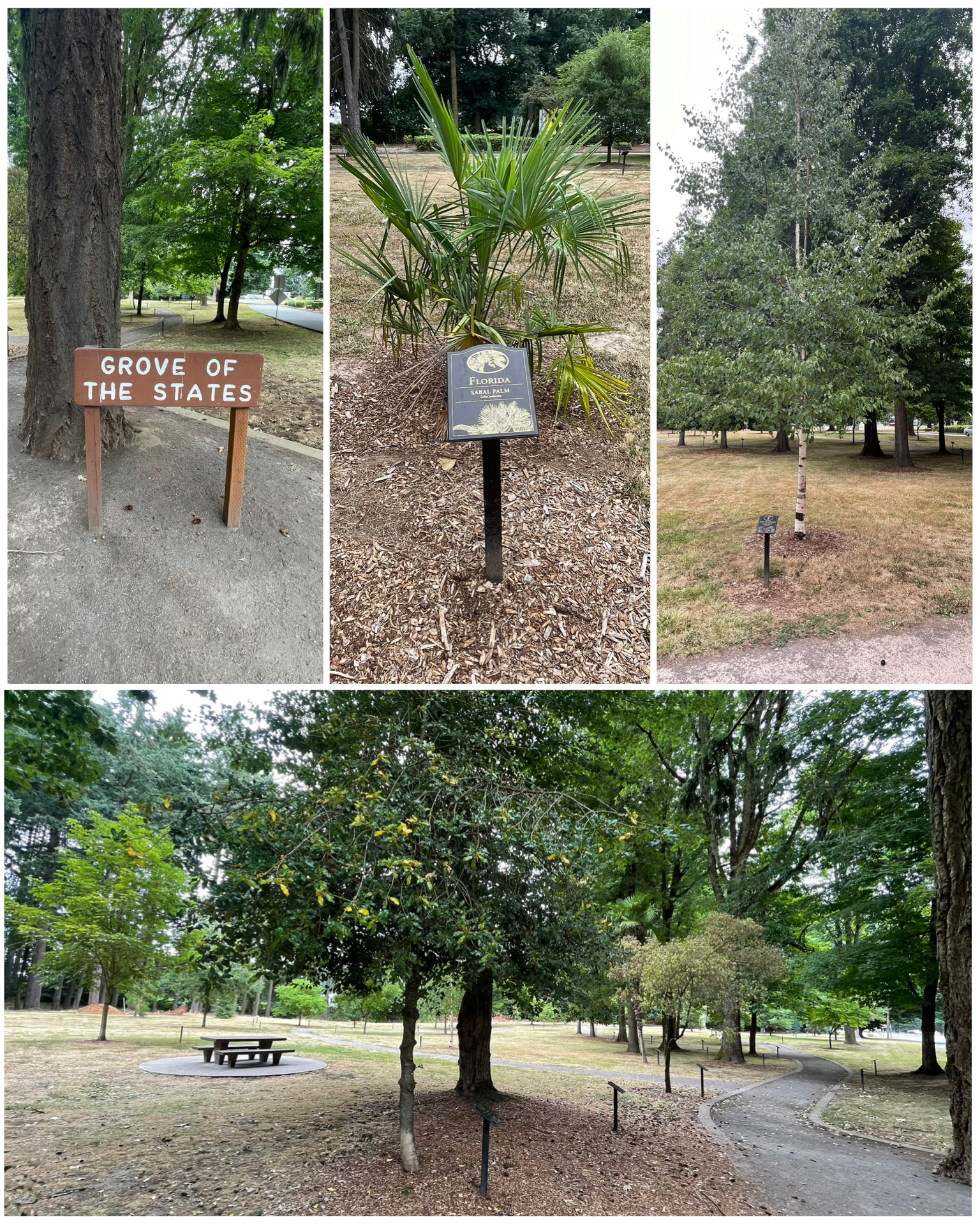 The next day, I began my exploration day by heading south on the I-5 interstate, making my first pause at the Baldock Rest Area just 5 miles south of the campground. It’s much like many other interstate rest stops complete with bathrooms, picnic tables, vending machines, and lots of parking for cars, busses, RVs, and trucks. But what made this particular rest stop unique was the other thing that it featured. Known as the Grove of the States, this is a nice walking trail that meanders through a lightly forested area, featuring a variety of trees that are representative of each of the 50 United States. So for each of the states, there is a plaque in front of a tree that is unique and native to that state. It was fun walking through seeing each of the trees. I was especially looking forward to seeing the entries for Florida, and for my home state NH. Florida’s entry was a Sabal Palm (at left, top center). It was noted online that some of the trees had died, and had to be replaced. This small bush like variety from Florida looked to be one of those recent refreshes. I continued my walk along the trail, looking forward to seeing what might be the NH participant. I walked and I walked, passing many states along the way, but not yet had reached NH. What could it be? Could it be a pine or spruce? Or perhaps a an elm or a red maple. Then as I turned the corner, I saw it out of the corner of my eye. It was still too far for me to see the sign, but I knew instantly that this was the NH tree. It had a white bark – the only tree in the entire collection with a white bark. It had to be! Sure enough, there it was – the NH Paper Birch (at left, top right). I grew up with birch trees in my back yard, and have always had a special connection with them. While most all other trees have a dark bark, the white color of the birch is kinda unique and special. So, my trip here was fun, and also reminiscent of my youth back in NH. It was a fun stop!
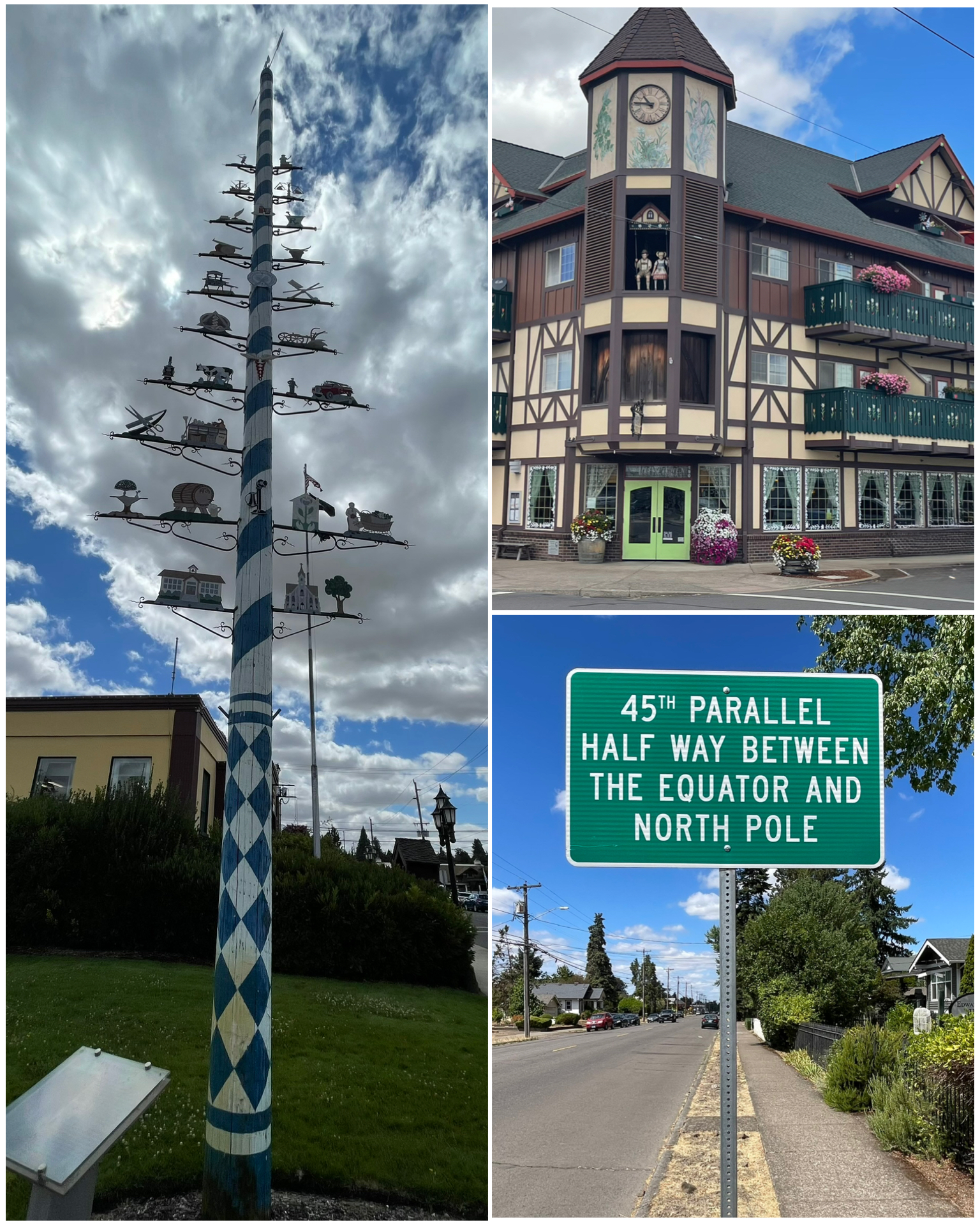 I continued my drive to the south to the town of Mt Angel. There I would find another Bavarian-themed town, though clearly not quite as extensive as I had visited back in Leavenworth, WA. But, they did have the customary Der Maibaum (aka May Pole) towering up to the sky filled with pieces that tell the story of the town. The lower branches contain items reflective of the town’s spiritual and intellectual foundation including representation of the parish and school, while the upper branches depict interests and skills of the town’s people, including golfer at the very top branch. Apparently a symbol representing the love of the game by many of its residents. Across the street is the town’s Glockenspiel – which is technically a percussion instrument consisting of pitched aluminum or steel bars. Mt Angel has such an instrument located in a 49-foot tower at the corner of a Bavarian-style building. It features wood carvings of community members and performs a musical routine four times daily at 11, 1, 4, and 7. Sadly, I was hours away from its next performance so I didn’t stick around for that. It was constructed in 2006 and was inspired by the Glockenspiel located in Munich, Germany. The small town has a population of just over 3,000, but is well known for its annual Oktoberfest. It’s the largest such event in the entire PNW, and has grown its attendance from 39,000 in its first year 1966, to upwards of 375,000 by the 1980s. I’ll bet its quite the party! Down the road a bit was this 45th Parallel sign – signifying the half way point between the Equator and the North Pole. Always kinda fun to find these little interesting intersections.
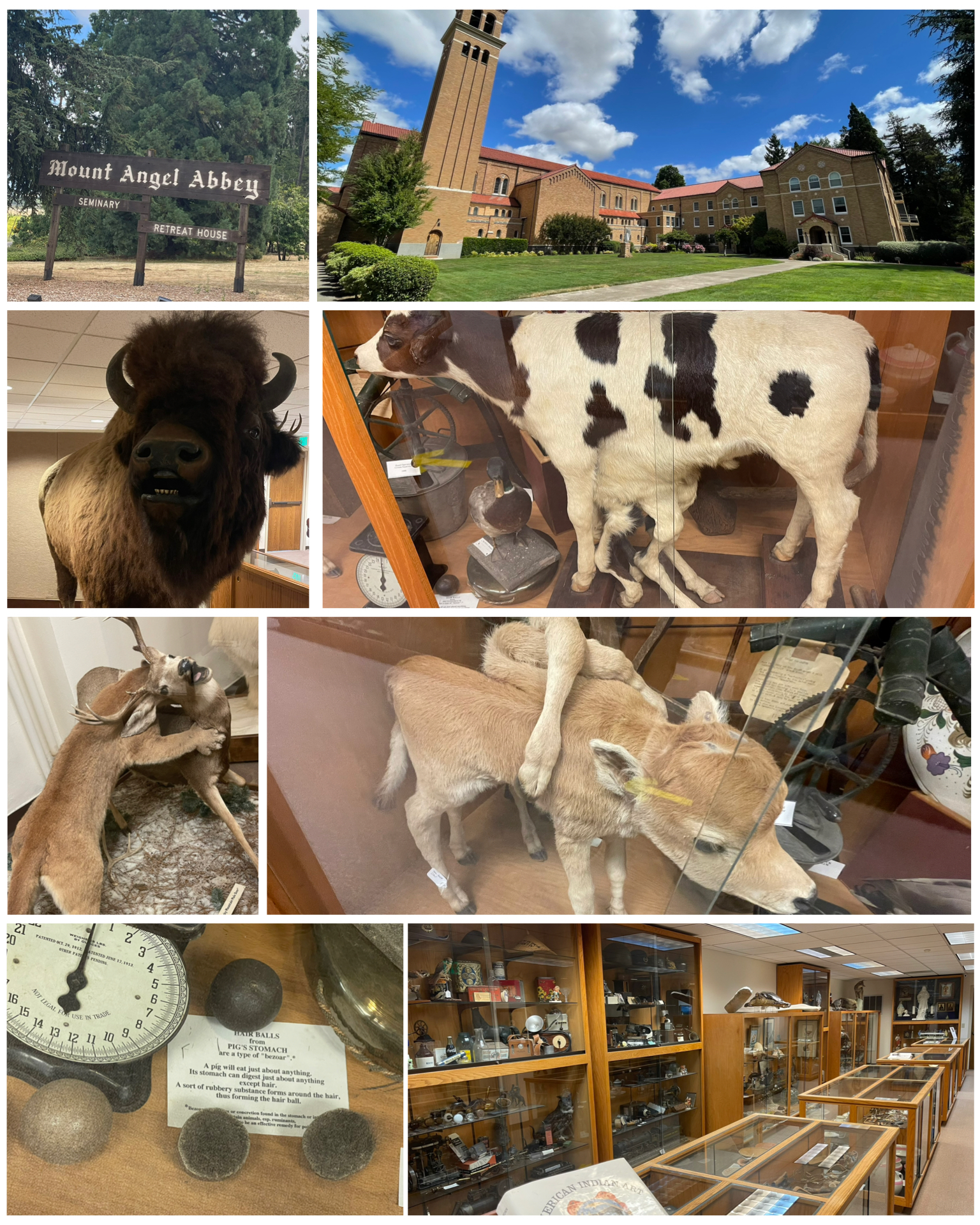 Just a short drive away from downtown and sitting atop Mount Angel is the Mount Angel Abby – a religious retreat house, seminary, and Catholic monastery. It was founded on October 30, 1882 by Benedictine monks who immigrated to the United States from Engelberg, Switzerland. The Seminary serves numerous western dioceses and has approximately 170 students and boasts a liberal arts college and the Graduate School of Theology. While it was a very beautiful and peaceful campus, that was not the reason for my visit. Rather, it was the onsite museum whose entrance sign describes it as a “rather eccentric collection of artifacts”. Besides its religious artifacts, it would be its near 150 year span and whose farm would produce some rather interesting animal oddities that would get it into the Roadside list. A conjoined baby animal (cow, deer, ??), an 8-legged cow, and a collection of some record-setting contents of a pig stomach (at left, bottom left) were the highlights. They also had a nice collection of various wild animals – many of them stuffed and posed in interesting situations like this mountain lion getting the better of a screaming mule deer (at left, bottom half left). It was an amazing mountain top campus, with a really weird museum and most certainly worthy of my stop.
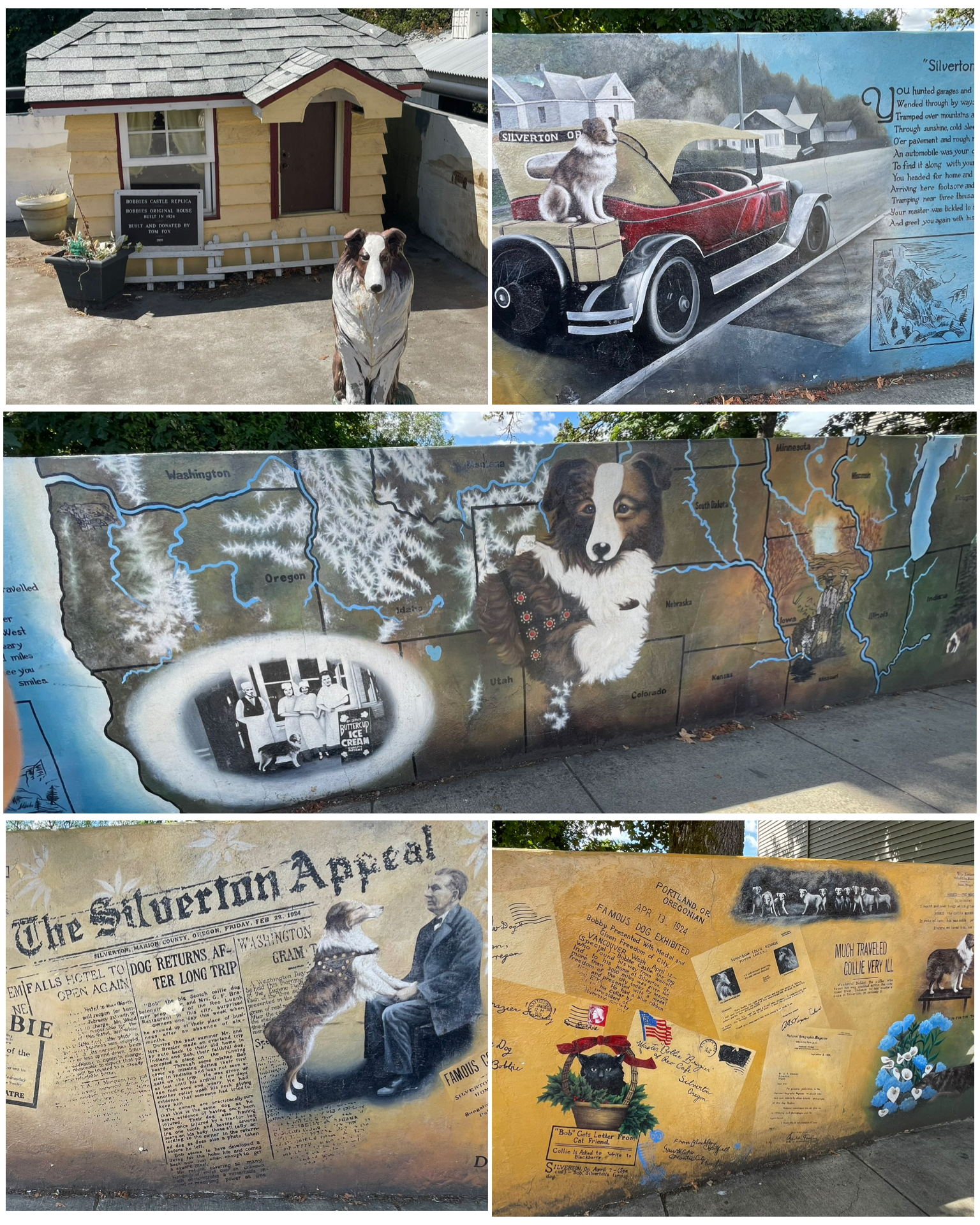 This next feature is for my sister-in-law Debbie who enjoys a good dog story. Silverton, OR is home to the adventures of Bobbie the Wonder Dog. Bobbie, a Scotch Collie-English Shepherd mix belonging to Frank and Elizabeth Brazier, would go on a family road trip from Silverton, OR to Wolcott, IN. It was 1923, so travelling would likely be no more than 15mph or so. Frequent stops at gas stations, hotels, or tourist camps would have been commonplace. Soon after arriving in Wolcott, a pack of three other local dogs chased Bobbie away from its owners and never returned. Following several days of searching and even putting a notice in the local newspaper, Bobbie was never found. The Braziers returned to Silverton assuming they would never again see their beloved pet. Six months later, in Feb of 1924, a ragged and obviously weary travelled Bobbie arrived in Silverton. He would walk the more than 2,500 miles back, crossing rivers and mountain ranges, all during the coldest parts of winter. Letters from those who saw and engaged with Bobbie confirmed he used those various stops they had made on the way out as points of reference on his solo return trip. He was an instant hero! Showered with fame, news stories, gifts, and lots of adoring fans, he was also featured in Ripley’s Believe it or Not, as well as a staring role in a silent Hollywood film (HERE – featuring the actual dog Bobbie, though it’s not his actual story, but rather a similar and interesting story none the less). He was the honored guest for a Portland Home Show where he received a custom made luxury dog house, as well as a crowd of 40,000 people who stood in line to meet and pet him. Now that’s a homecoming! A 70 foot mural telling his life story was painted in 2004 commemorating the 80th anniversary of his returning home, is on the main street of Silverton, as well as a statue and replica dog house. There’s an annual kids pet parade led by the winner of a Bobbie look-alike contest, along with a drawn wagon carrying the bobbie statue. He lived a good life until his death in 1927. He is buried at the Oregon Humane Society in Portland, and it was said that famed TV dog star Rin Tin Tin laid a wreath at his grave. What an amazing story of a dog determined to get back to his home. Truly amazing! A nicely done short documentary about Bobbie is also available on YouTube HERE.
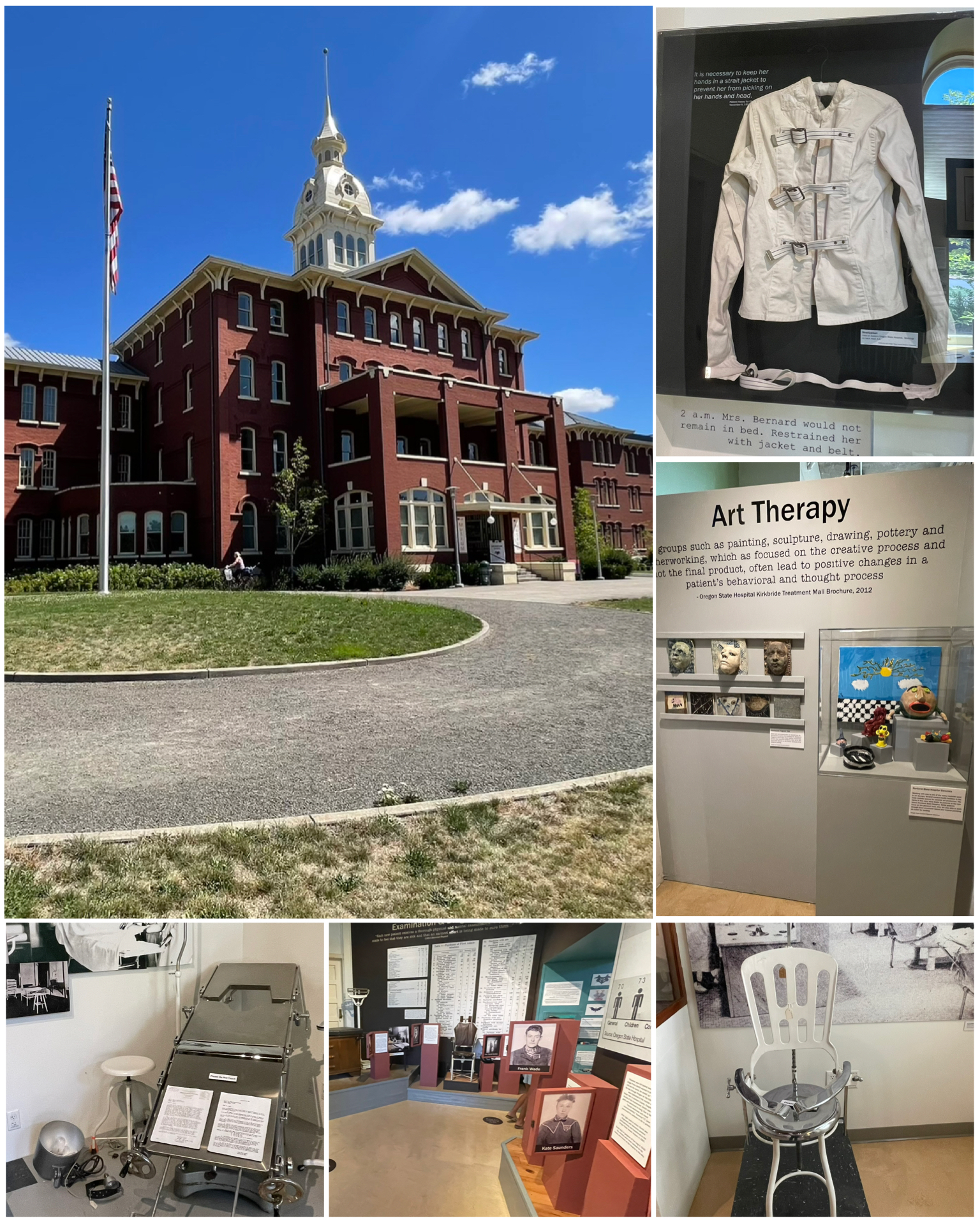 My next stop while exploring Oregon takes me to the state capital of Salem where I first visit the Museum of Mental Health. The museum is located in Oregon’s historic State Hospital – formally known as the Oregon Insane Asylum. The hospital that sits within a 100 acre campus was built in 1862 and is the oldest operating psychiatric hospital in the state of Oregon. Much of the original building has been taken down, but it continues to operate today with its recent additions of 620 beds, also making it one of the oldest continuously operating hospitals on the west coast. The museum is located in a preserved portion of the original 140+ year old building and features a giant timeline describing the psychiatric care methods that have evolved over the decades. This included artifacts and exhibits from the once practiced barbaric fields of electroconvulsive therapy, frontal lobotomies, eugenics, and hydrotherapy. But it also included exhibits related to occupational therapy such as art, music, recreation, and farming and food prep. The latter, food prep, was short lived however. In 1942, due to scarcity of people resources during the war, patients were used to augment professional kitchen staff. One such patient was sent to the storage room to fill a container with some powdered milk to be used in a meal being prepared which included reconstituted military surplus frozen eggs. Apparently this patient could not read, and instead grabbed what he thought looked like powdered milk when in fact, it was sodium fluoride. Within minutes after the meal, patients complained of cramps, vomiting blood, and respiratory problems. As time passed, more patients grew ill, and by 10pm, 10 had died. As the ailment worked its way through, a total of 467 patients were stricken and the death toll had risen to 47. So ended the practice of putting patients to work in the kitchen.
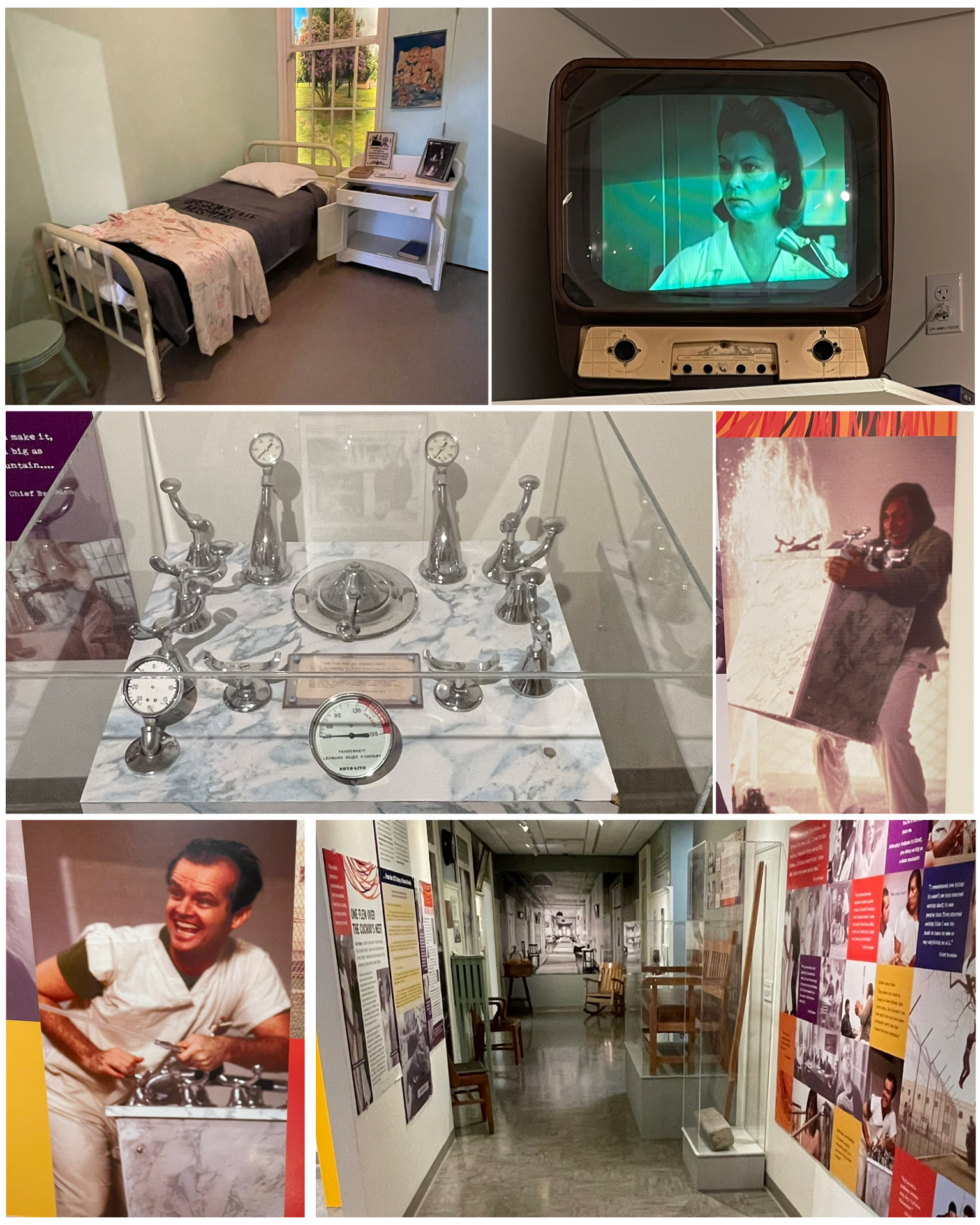 In addition to the interesting stories and artifacts found in the museum, this facility had one more special treat to share. This hospital facility was used as the filming location for the 1975 Academy Award-winning movie “One Flew Over the Cuckoo’s Nest” that stared Jack Nicholson as R.P. McMurphy and Louise Fletcher as Nurse Ratched. The museum has an entire section dedicated to the movie, and contains many artifacts from the film. Of particular note, the museum features the actual common room TV that was used in a scene where McMurphy wanted the TV to be turned on, but was denied by Nurse Ratched. So instead, he pretended to be watching a baseball game while providing play-by-play calls as the game progressed, which encouraged all his fellow patients to join in. It’s a classic scene from the movie, and can be seen HERE. The museum even had that scene playing on a loop on the actual TV. Very cool! The museum also had the hydrotherapy machine that was also featured in a movie scene where the Chief tears it from the floor and uses it to smash through a window which he then climbs through to make his escape. That scene can be viewed HERE. An interesting trivia fact from the movie is that both real doctors and patients from the hospital were used as extras in the film, but their roles were reversed. That is, doctors played the role of patients, while patients played the role of doctors. It was a big hit and apparently a lot of fun for them. They all also enjoyed a private pre-release viewing of the movie. The only negative result of that was them seeing the escape scene which in the film featured them using an actual tree branch just outside of one of the windows to aid in the escape. Apparently, a few patients actually tried to mimic what they saw using the same tree branch as that used in the movie, resulting in the hospital having to finally cut down that tree limb. Too funny! It has been decades since I’ve seen this movie, and taking this trip down memory lane was certainly a lot of fun. Now I want to see the movie again!
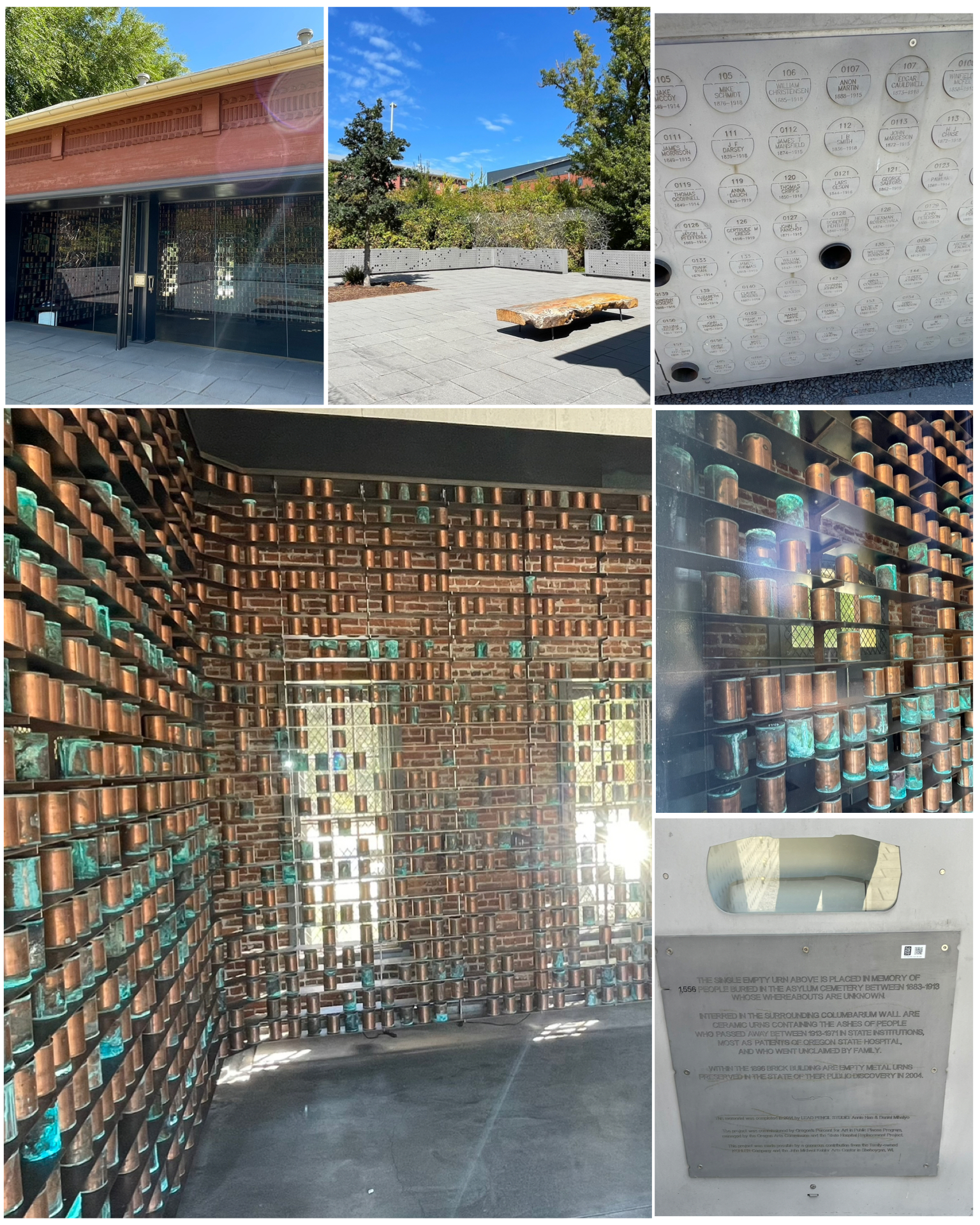 The final building I visited on the campus was the Hospital Memorial which has its own very interesting history. Over the many early decades of the hospital’s operation, there would be the occasion of the passing of a patient while in their care (certainly including the mass poisoning story noted above). Often times, families of the deceased either could not or would not claim the body, leaving the hospital with the responsibility to deal with it. Fortunately, the hospital happened to have its own crematorium which was put to use thousands of times. After cremation, the remains were placed in a sealed and uniquely numbered and stamped copper can, then stored in the basement of the building where it would be forgotten for many many decades. In 2004, over 5,000 of these copper canisters, many of which were corroded and oxidized from moisture exposure, were brought to the publics attention after Oregon state senator Peter Courtney came across them while touring the hospital. Subsequent governmental and public pressure forced the hospital to take some action to better honor the remnants of these deceased patients. So, they identified each of them using old records matched to the unique canister number, then transferred their remains into new modern urns (at left, bottom right). A new wall was built (at left, top center) to safely and securely store each of the urns in numbered slots, while a new glass wall building was built to house the thousands of original, and now historical, empty copper cans. They also continue to take the initiative to reach out to any surviving family members who might want to now claim the remains – a few of which have done so which created the empty holes in the wall (at left, top right) now void of any remains. A somewhat happy and satisfying ending to an otherwise tragic hospital practice that was publicly exposed.
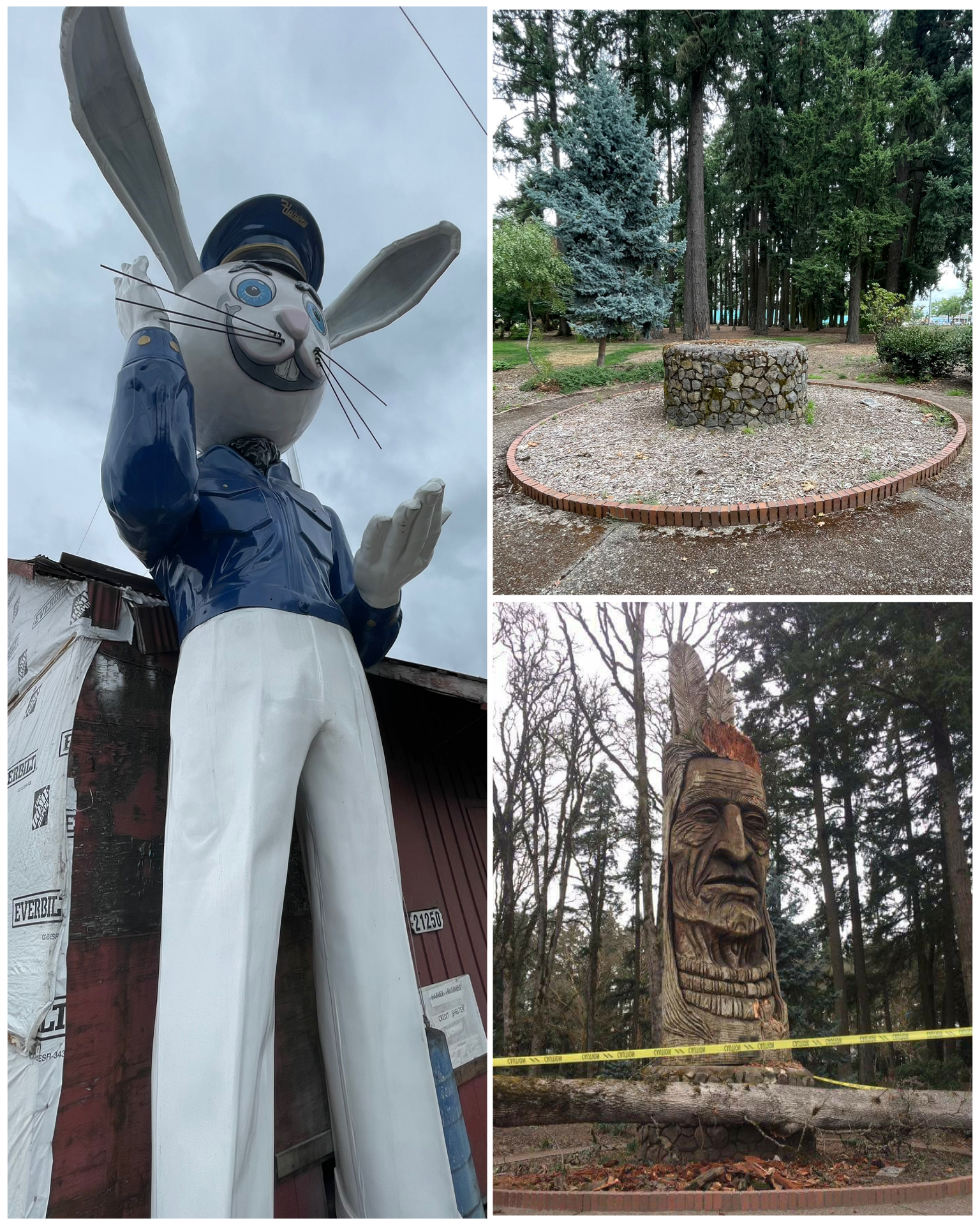 Later in the day I headed west of Portland to chase after a few interesting Roadside items. First up in Aloha, OR is this giant rabbit. Known as Harvey the Rabbit, this half man, half mutant rabbit stands upwards of 26 feet tall, and was the brainchild of Ed Harvey. The story goes that this statue began life in the late 1950’s as a Texaco Big Friend statue (similar to the famous Muffler Man statues that are all around the country), that got damaged in a 1962 storm. The Texaco station owner brought the damaged mascot to Ed Harvey – owner of Harvey Marine and a well skilled craftsman at fiberglass repair. Ed fixed the Big Friend good as new, but the station owner never returned to retrieve him – leaving him there at the boatyard for several years. Then Ed had an idea. He was a fan of the Jimmy Steward film that featured an invisible rabbit named Harvey, and since rabbits bring good luck, he figured if he made the statue into a giant rabbit, he could use it for advertising for his marine store. And that it did! The rabbit was famous and became a lovable icon in the town. Despite the marine business closing in 2017, Harvey is still hanging around town and will likely never leave. Next I drove out a bit further to the west to Hillsboro to visit Shute Park. There, I was supposed to find another one of Peter Toth’s wooden Indian carvings, but alas all I found was this empty stand (at right, top right). Well, apparently on February 2017, the top of the carving was damaged when a wind storm blew a tree into the front side, shearing off part of the head also causing the entire statue to lean (see news photo at right, bottom right). Sitting in this state for far too long, the inside of the exposed interior wood began to deteriorate. Eventually in June of that year, it was determined that the statue could not be saved and was removed. So, had I read about this tragic demise of this statue as part of my homework, I could have saved a trip out to the park. But anyway, it was a nice park and a nice walk through it to at least see where this chief once stood.
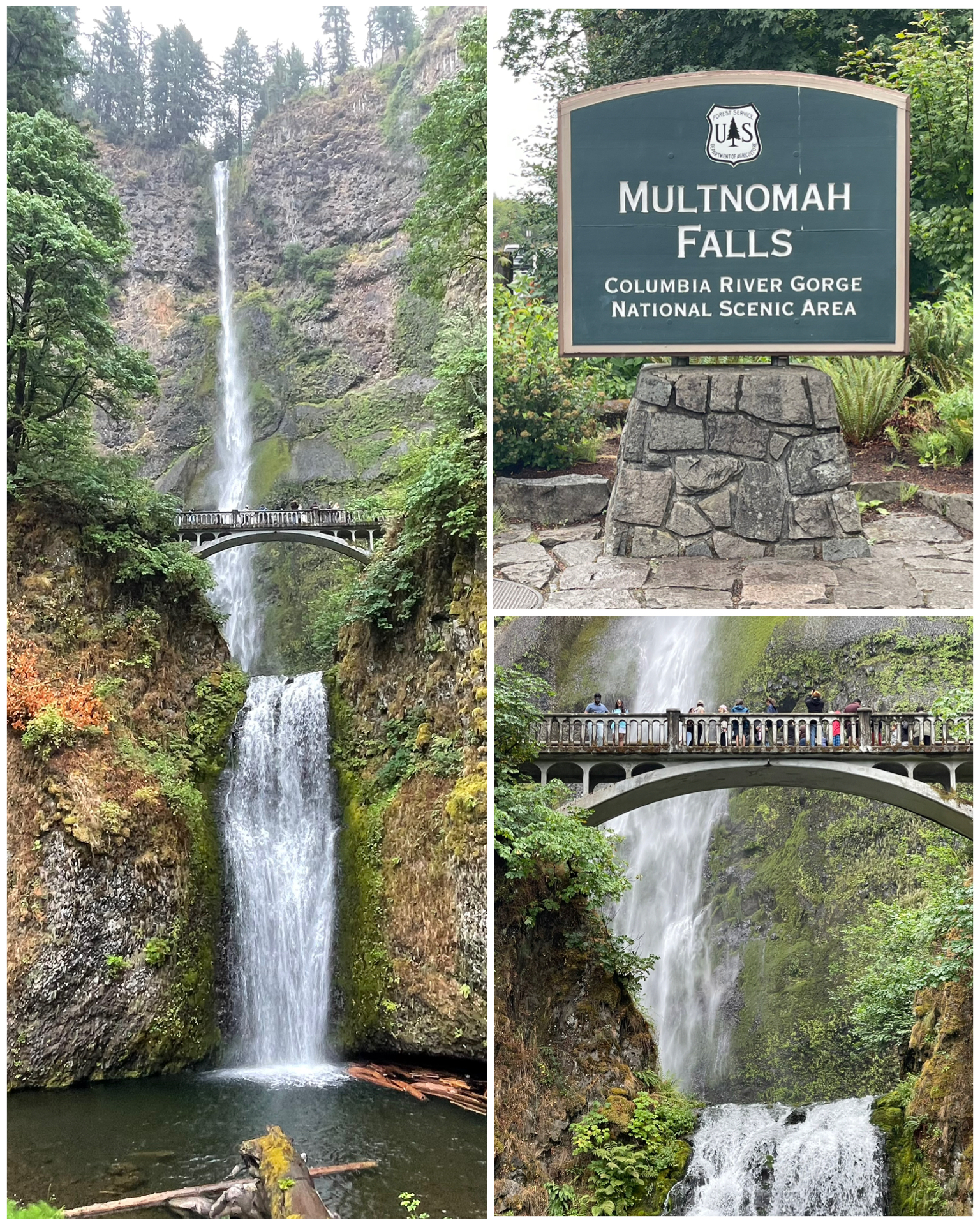 There are lots of beautiful waterfalls in Oregon, with perhaps the most popular being Multnomah Falls – a National Scenic Area that is part of the Columbia River Gorge. Located east of Portland, right adjacent to, and visible from I-84, this nominal 620 feet tall falls is the tallest in the state, and reported to be the 2nd tallest year-round waterfall in the country (though that second claim is apparently often in dispute). Either way, it is a beautiful waterfall. The iconic Multnomah Creek Bridge, built in 1914, spans the creek roughly at the point where the upper 542 foot falls ends, and the lower 69 foot falls begins, and is itself part of the National Register of Historic Places. The falls attracts over two million visitors each year, making it the most-visited natural recreation site in the U.S. Pacific Northwest. Access to the falls is via a dedicated exit from the interstate from either direction that leads to a parking area. A short walk including a trip through a tunnel that goes under the interstate, leads to the visitor area. To keep things flowing smoothly, the NPS issues timed entry tickets so that crowds can remain balanced, with some entries available onsite to accommodate those that are just passing by. What an absolutely beautiful waterfall – most surely one of the biggest and best I’ve ever seen.
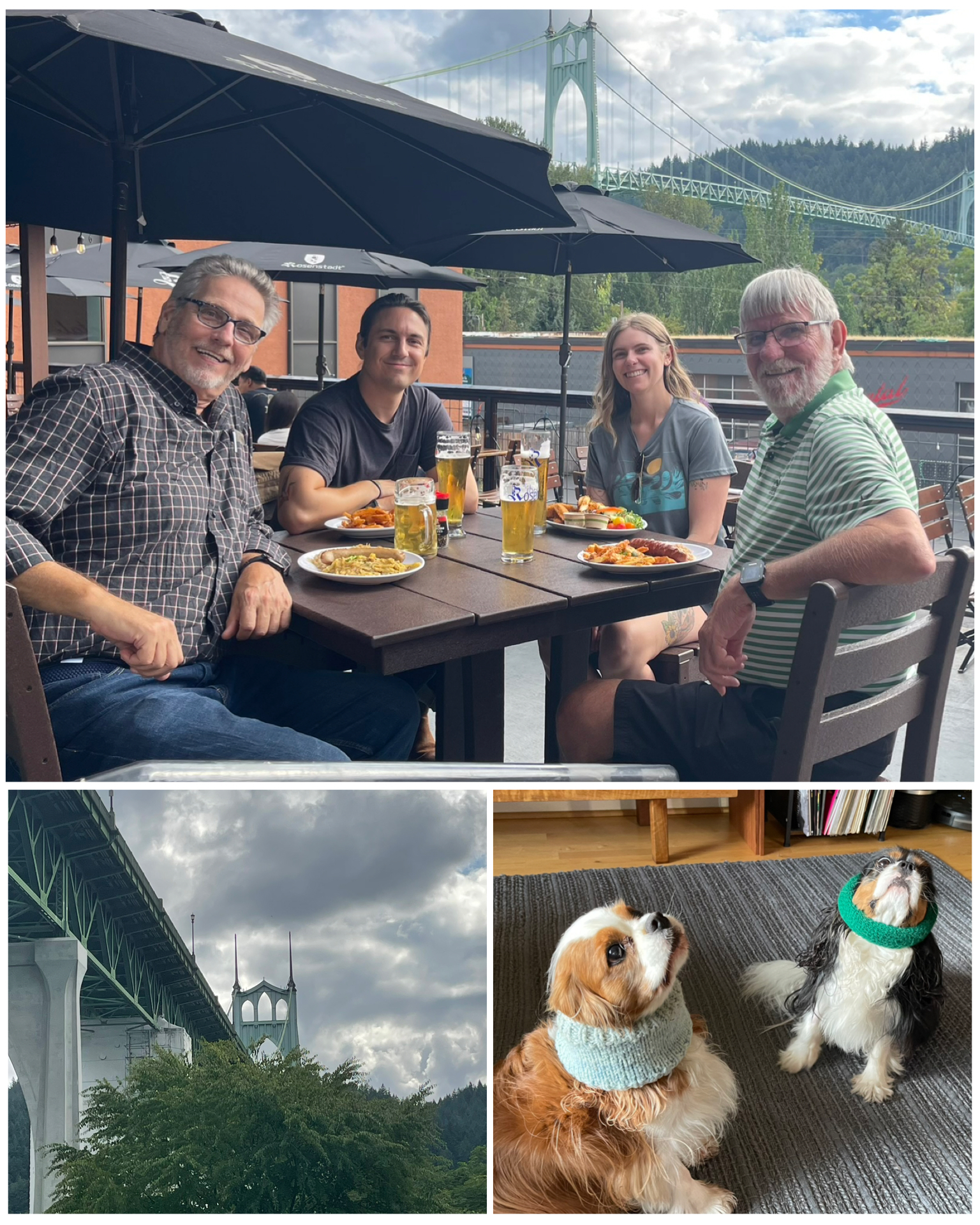 The next day was Saturday, and the day that my brother Gerry was to be driving down from Washington to Portland to spend the weekend with his daughter, and my niece, Nicole. In mid afternoon, I met up with them at Nicole’s really nice condo, after which I was given a walking tour of parts of downtown Portland on our way to a nice German restaurant. Nicole is doing great as an agent helping elder folks with all the nuances associated in getting setup for assisted living, while at the same time truly enjoying living in her element as a resident in downtown Portland. Of course I also had the pleasure of meeting the kids – Ezra and Beau, a pair of beautiful Cavalier King Charles Spaniels. It was dinner time, and apparently their long floppy ears will sometimes end up getting soiled in their food, so to solve this they get them pinned back with headbands first. How absolutely adorable! I also had the pleasure of meeting Chris, Nicole’s friend, who besides being a really nice guy, happens to be a very skilled cinematographer. In fact, he has led filming activities for many documentaries – one recent one in particular titled “Atomic Echos”. It’s a documentary that tells the story of “two friends, connected by family histories on opposite sides of World War II, set out to explore the lasting trauma of the Hiroshima and Nagasaki bombings. While Japanese hibakusha endure lifelong health complications and psychological scars, American atomic veterans who witnessed the bombings’ aftermath also struggle with radiation-related illnesses and PTSD.” It was just recently released last month (Aug) as part of the 80th anniversary of the atomic bombings, and is free to stream on PBS. I really enjoy documentaries, and since I spent several years living in Japan, this one was even more interesting to watch. It’s an amazing story – of course with great cinematography. Highly Recommend you check it out! Part of our walk to the restaurant took us past the iconic Portland bridge known as the St. Johns Bridge (at right, bottom left). This bridge also happened to be our viewpoint from the restaurant as seen in the background of this blog dinner photo. Great seeing you again Nicole and Gerry, and nice to have met you Chris. Looking forward to seeing more of your work in the future.
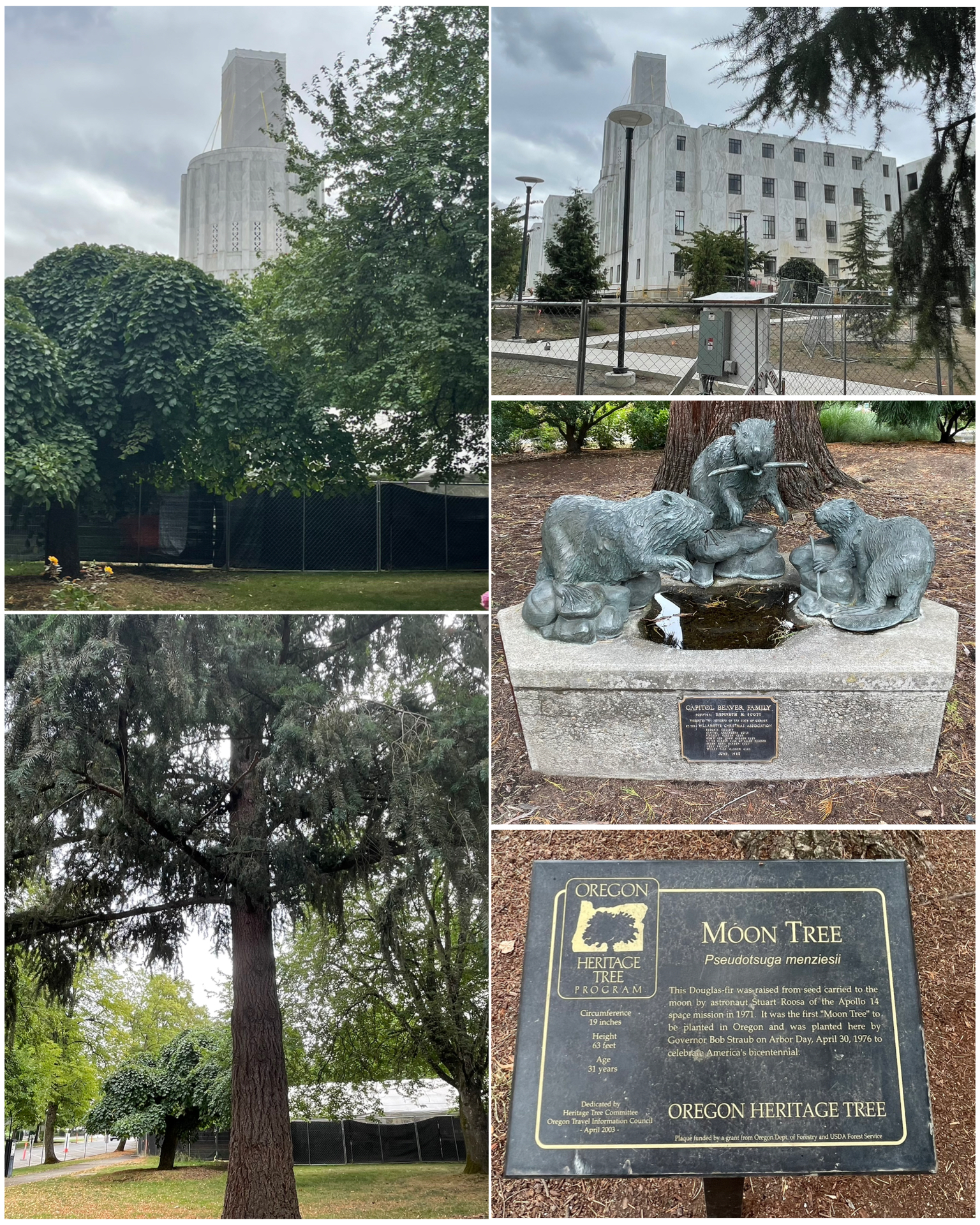 On my last day in the area, I went back to the south, first again stopping in the capital city Salem. I was hoping to check out the state capital building, as well as a few Roadside items along the way. Sadly, the capital building is currently undergoing some significant renovations, and is closed to the public and not scheduled to reopen until the end of Sep. But, one of the Roadside items I wanted to see was the beautiful golden lumberjack – officially known as the Oregon Pioneer, that sits atop the capital building. I figured even if the building is closed, I’d be able to catch a glimpse of the woodsman. But alas, the renovation was so extensive that even the old pioneer was encapsulated and covered up (at left, top right). Construction fencing all around also prevented getting anywhere near the building for some up close candid photos, so I did my best to get what I could. Near the capital is a small park that had a couple of interesting things in it. First up was a Moon Tree. I have visited a few other Moon Trees in my travels, and this one was nicely grown up. This Douglas fir started out as a seed that took a trip to the moon along with astronaut Stuart Roosa who was part of the 1971 Apollo 14 mission. Also in the park was this interesting group of beavers gather around chomping on some tree branches. It’s called the Capital Beaver Family and was a donation to the Capital of the State of Oregon by the Willamette Christmas Association. Cute little statue!
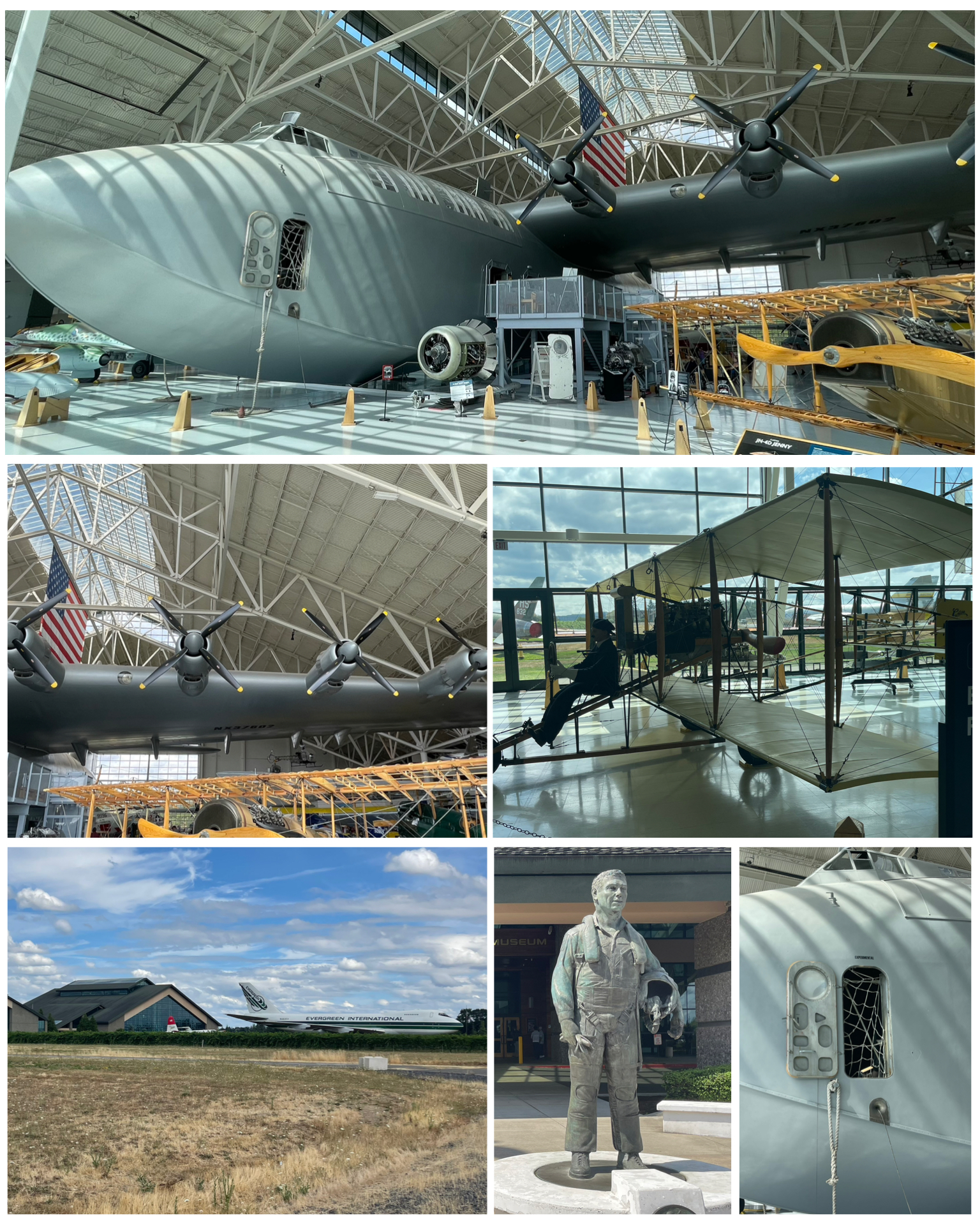 My final stop of this leg of the journey takes me to McMinnville, OR to the Evergreen Aviation & Space Museum. I have visited lots and lots of aviation museums in my travels, and even a few that featured space exhibits. This museum was much like all the others I’ve been to in that they exhibited lots of historical airplanes – some military, and some civilian. But what made this museum truly unique was the extremely oversized hanger that showcased a very, very special and unique airplane. This museum houses the Hughes H-4 Hercules aircraft – or perhaps as it might be better known as, the Spruce Goose. This thing is absolutely massive, and extremely difficult to photograph due to its enormous size. This was a prototype aircraft built by the Hughes Aircraft Company – led by none other than Howard Hughes. For the longest time, it was the largest flying boat ever constructed, and it had the largest wingspan of any aircraft ever flown (that is until 2019 when another larger aircraft flew). It was to be a transatlantic transport plane to be used in World War II. However, it’s first and only maiden flight did not take place until Nov 1947, after the war had already ended, so the project was scrapped. The Hughes Aircraft company maintained the aircraft in a climate controlled hanger until Hughes’ death in 1976. After that, a piece of the wing made its way to the Smithsonian Museum, while the rest of the aircraft hopped around through several private organizations for display and use in California, including a stint with the Walt Disney company. Then, when Disney decided to scrap its planned use of the aircraft, it was given to the Evergreen Museum in 1994 where it has been hanging out ever since. It was a fun trip, and really cool to see this one and only historic airplane.
Sutherlin, OR
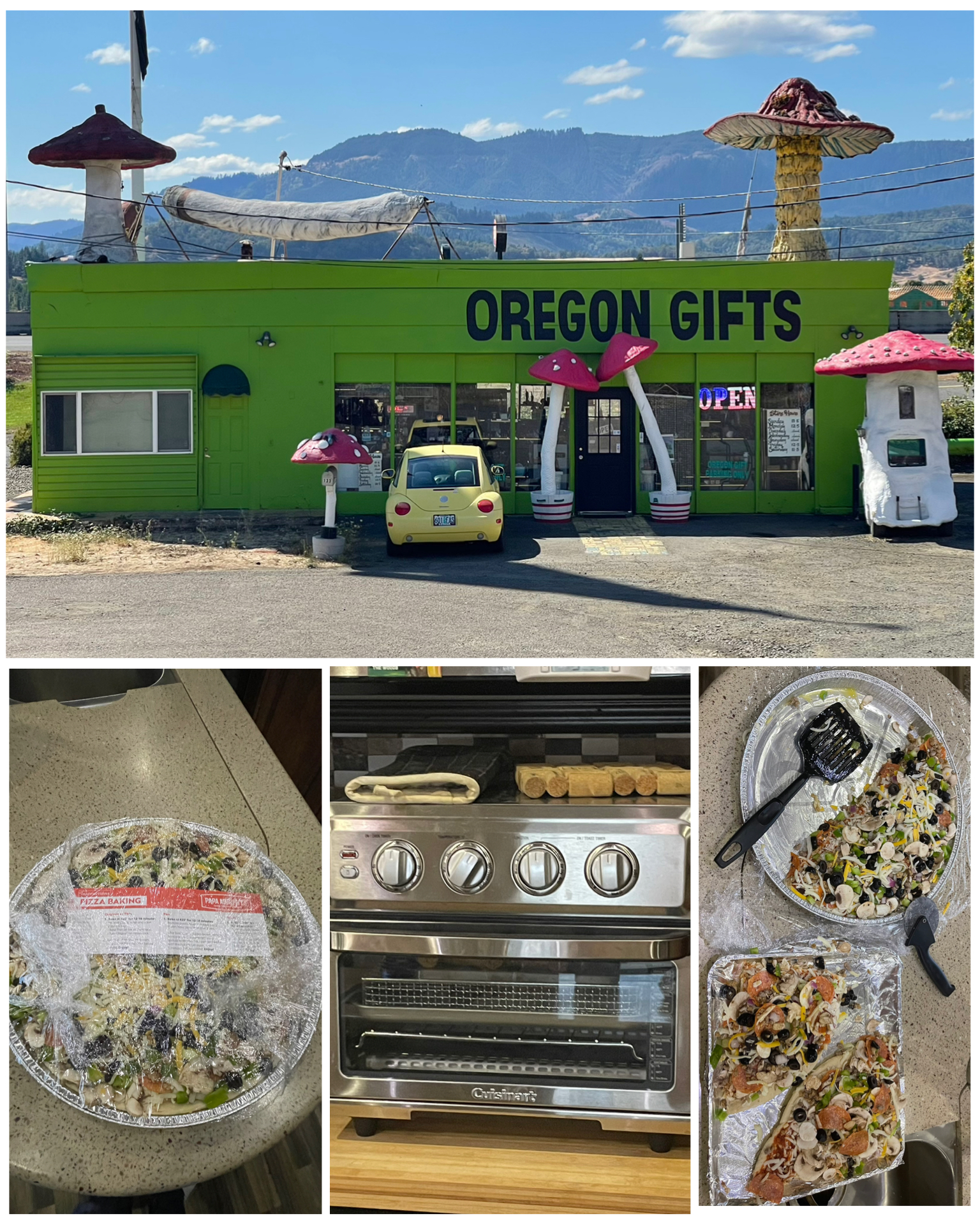 So I left the Portland area and headed south on I-5 to the community of Sutherlin/Umpqua. I pulled into the KOA, checked in the with office, then headed to my nice full hook up pull thru site. It wasn’t long before I had the RV unhooked from the truck, all the power line and hoses connected, slides out, AC on, and a beer opened. As I was relaxing and doing my planning for what to see in the area, I got an urge for a pizza. Lucky for me, a quick google map search showed a pizza place right here in town, just a couple miles out. They had a website where I could order the pizza online, which I did. ETA for pickup was 25 minutes. So, I did a bit more planning to kill some time, then went off to go get my delicious pizza. When I arrived, there were a few pizzas sitting on a wire rack, one of which had a sticker with my name on it. Wait – this can’t be right! This pizza is wrapped in plastic, and more importantly, it’s uncooked. I approached the counter to inquire about my pizza being raw, and was told that’s how they prepare them. They are take-home and cook yourself pizzas. I mentioned I live in an RV and asked if they could cook it for me, and was told that they don’t even have an oven. There was nothing obvious that I saw on the website that indicated these are uncooked pizzas. I new I was screwed as this pizza had no chance of fitting in my little electric oven. Granted, I do have a bigger RV oven that runs on propane, but I’ve only used it a couple of times, and lighting the pilot is an absolute pain in the a$$. Not to mention, I have no idea how much propane I have as that too is something that I haven’t used in several years. So my only option was to cut up the pizza into pieces, and cook it in multiple sessions. I did that and overcooked the first batch, but did a bit better on the second. Why would a pizza place only offer raw pizzas? That just didn’t make sense to me. Then, as I walked out of the pizza joint, I noticed this other business in the same strip mall that had a giant joint and some magic mushrooms on its roof. It all now became clear to me. The locals like to cook their munchies!
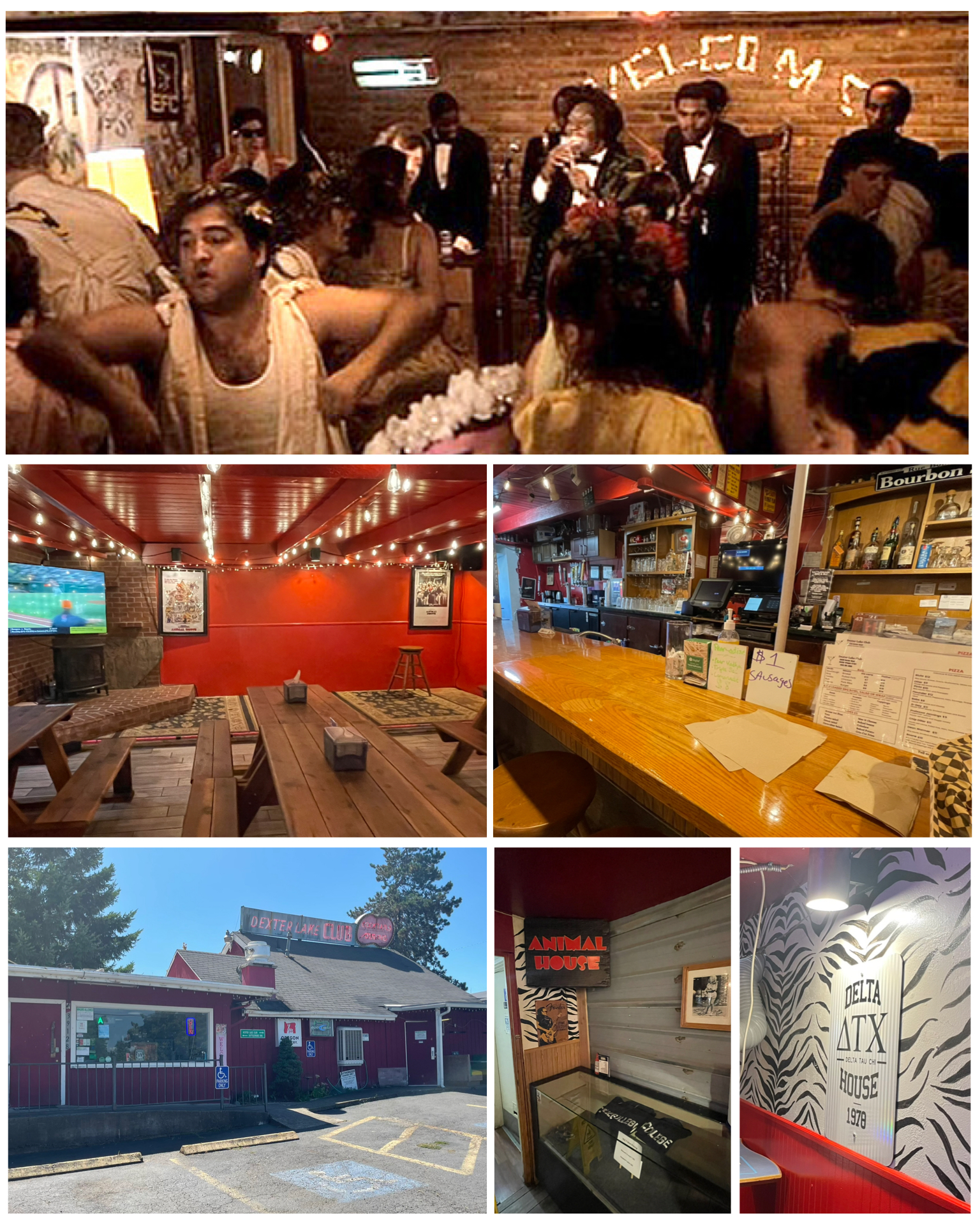 One of the Roadside entries that I had found was a visit to the Dexter Lake Club in Dexter, OR (at right, bottom left). It was a bit of a hike to get there being some 65 miles northeast of where I was, taking just about an hour to get there. But, after reading its claim to fame, I had to go. It turns out this was one of the filming locations for the crazy comedy movie Animal House. In the movie, this bar was the road trip scene where the guys from Delta took the girls from Emily Dickinson College on dates, and where the music group Otis Day and the Knights were performing (at right, top). There were lots of original artifacts in the bar that were present in the 1978 movie including the zebra wallpaper and the short stage on which Otis and his band performed. This movie has always been one of my favorites, and was one that I’d seen hundreds of times as this was one that I had ran when I was a projectionist in North Little Rock, AR. It was just about lunch time when I arrived, so I decided to order a beer and lunch and to stick around a bit to truly take in all the Animal House juju that was present. I chatted with the bar owner a bit who was knowledgeable about the movie and its history. In fact, it was he who told me that all the college campus scenes were filmed in nearby Eugene at the University of Oregon. So I got on the Internet and did some searching for Animal House filming locations, and sure enough found references to several of the UO buildings that were used in the film. So obviously, that would become my next stop.
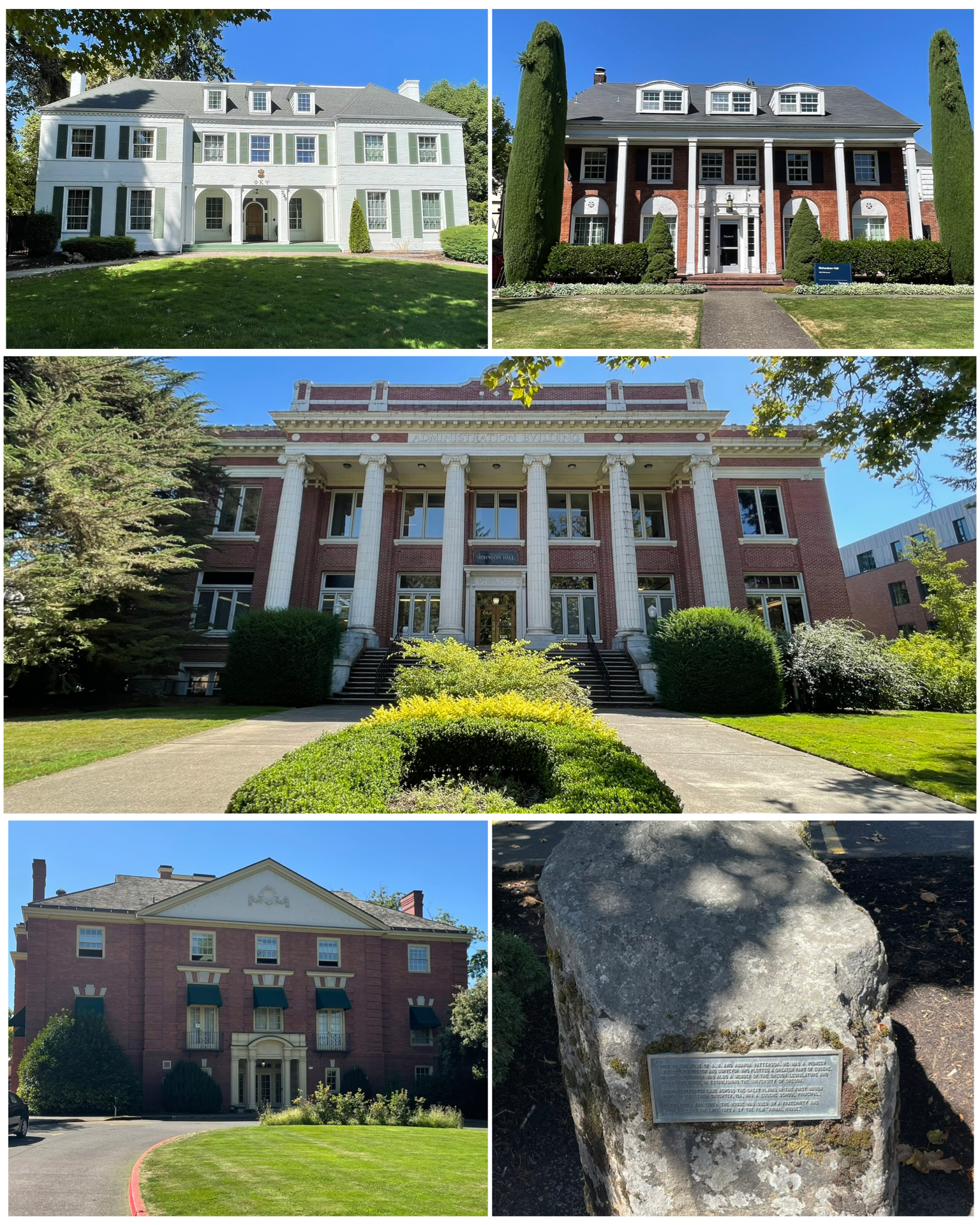 Universal Studios was the production company for the Animal House movie and was looking for a college campus from which to film. After being turned down by the University of Missouri, they reached out to the University of Oregon who agreed with a compensation package including $20k and an agreement that the university not be identified in the film. Many of the current university buildings were used in the movie to represent the fictitious Faber College. The main campus building in which Dean Wormer had his office used UOs Johnson Hall (at left, center), while the Phi Kappa Psi House (at left, top left) – a UO fraternity house on campus, became the straitlaced Omega House in the film. Sadly, the home to the drunken ‘Delta’ fraternity was demolished in 1986, while its famed location is memorialized by this plaque on a rock (at left, bottom right). The universities Sigma Nu fraternity (at left, top right) became the Tri Pi Sorority House, though the rear, where Bluto (John Belushi) climbs the ladder to peek in on the coeds, was not from this
 location. Lastly, where the Delta boys call upon the girls from Emily Dickinson Hall was actually filmed at UOs Gerlinger Hall (at left, bottom left). It was fun walking around this campus seeing all these famous Animal House movie buildings.
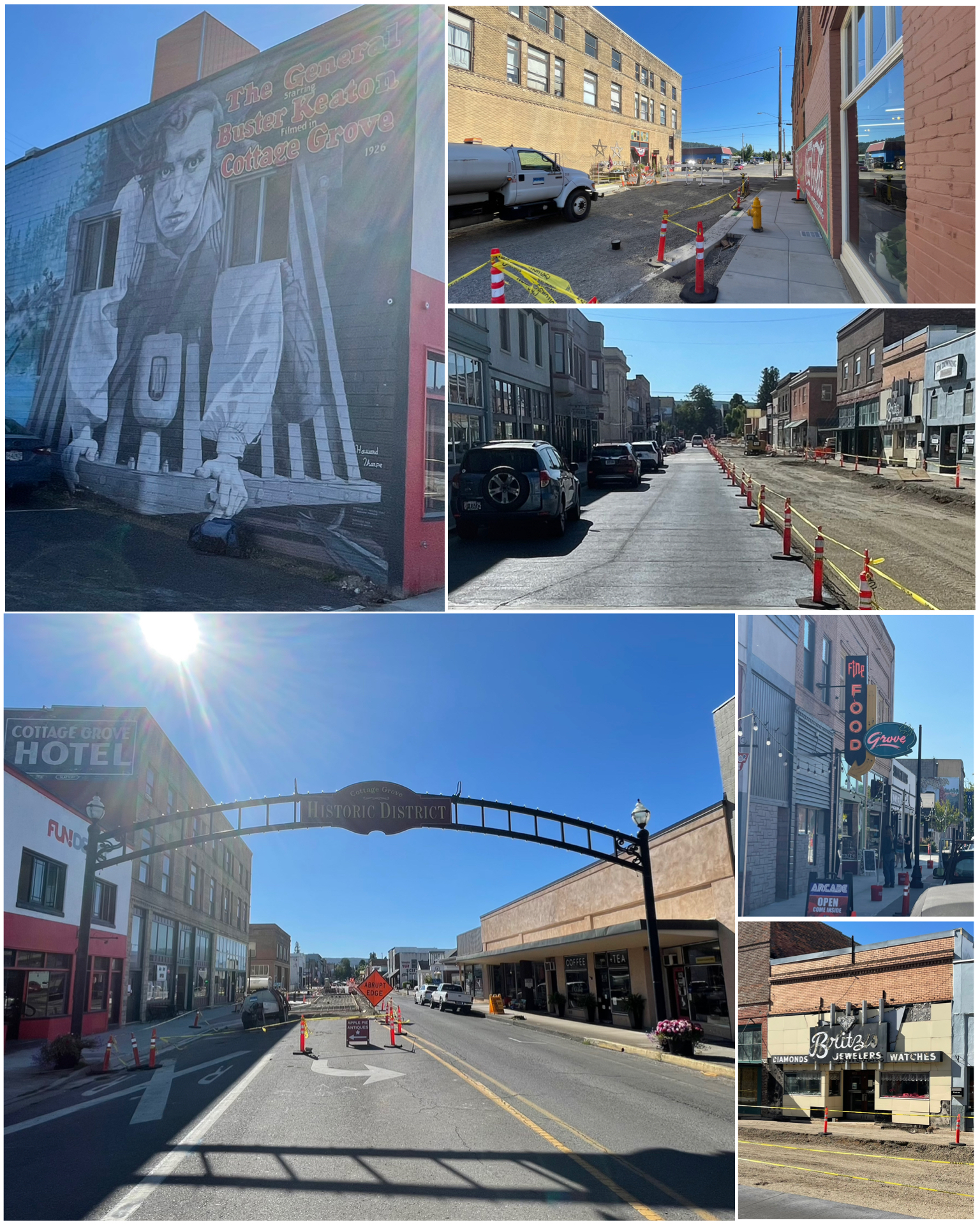
Last up on my Animal House tour, I traveled 20 miles to the south to visit the town of Cottage Grove – home to the famous final scene in the movie where they hold a parade. The Main Street historic district was actually going through some sort of major construction project, but I did manage to walk around a bit to get a few pictures. I didn’t see any signs or other markings that commemorated this street from the Animal House movie, but there was a giant mural of Buster Keaton (at right, top left) that indicated the 1926 movie The General was also filmed here in Cottage Grove. So I don’t know if the town will add some references to the Animal House movie after all the roadwork is done. Some of the neon signs that were seen in the movie are still present in town (at right, lower right), while the side street where the parade is intentionally misdirected by the Delta boys is also present (at right, top right). Overall, this was a really fun trip exploring all these Animal House filming locations, and brought back some great memories of the movie. Now I’m gonna have to watch it again for old times sake.
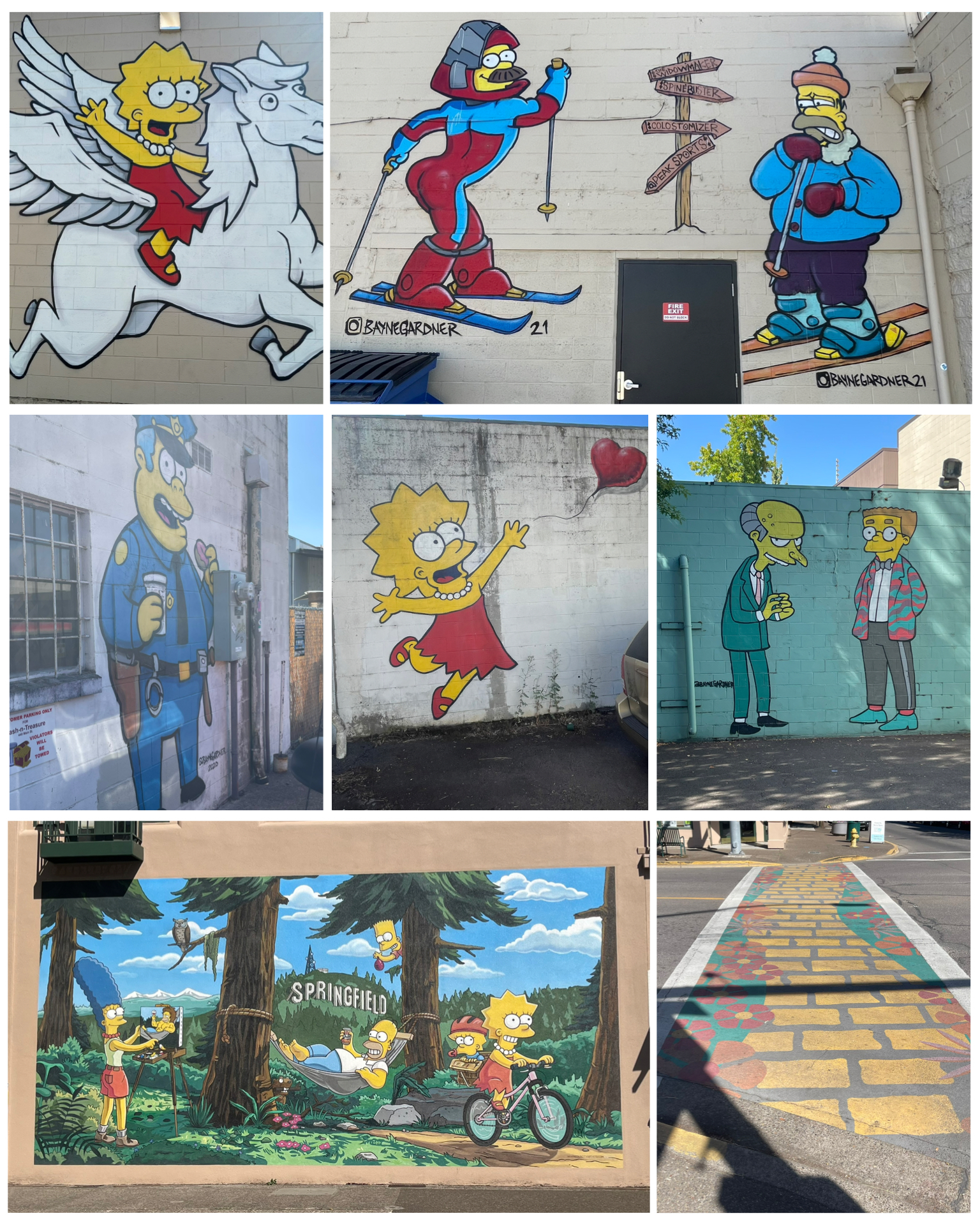 After my visit to Eugene, I headed a few miles to the east to explore the town of Springfield. For any Simpsons fan (not really me), you might recognize this name as the fictional town from the series. Apparently, there is a huge battle going on between Springfield, OR and Springfield, IL as to which town is home to this long running animated show. A bit of research found that both towns have received numerous subtle references from the show, and both claim to be the host city. But supposedly the show’s creator, Matt Groening, signed a plaque in the city’s Hall confirming it was modeled after Springfield, Oregon. Groening, a Portland, OR native, chose Springfield, OR as the namesake because he was inspired by the show Father Knows Best, which was set in a Springfield, Oregon. Further, many character names like Flanders and Lovejoy, are based on street names in Portland, where Groening grew up. The town has certainly embraced the fact that they are the host town, and have lots of murals all around town to prove it. It was fun walking around seeing individual characters featured in all sorts of hi jinx, with a large full cast featured mural with the town’s name (at left, bottom left). A must stop for any “real” Simpsons fan.
Prospect, OR
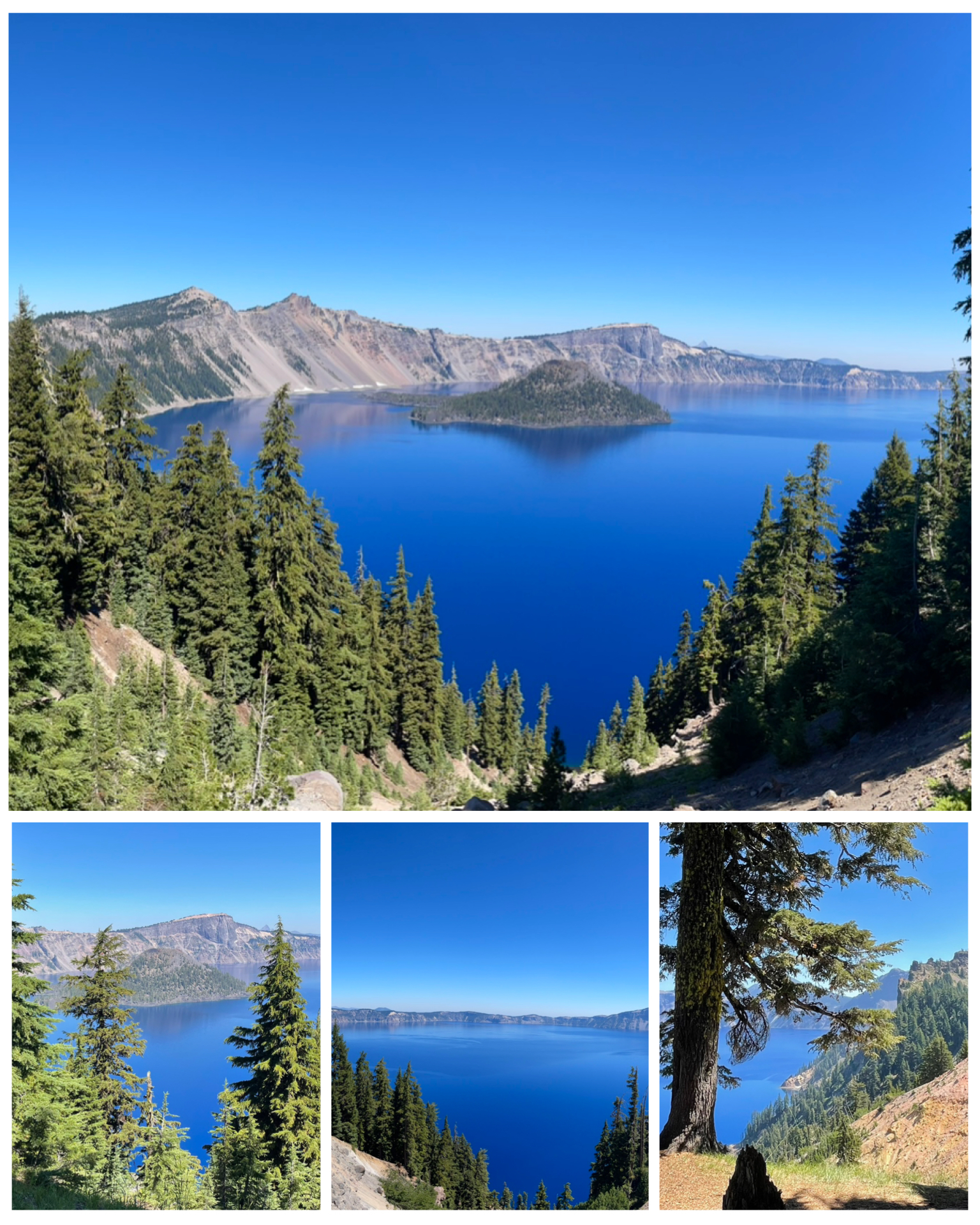 My next stop takes me to Prospect, just about an hour to the entrance to the place that was top of my list for this particular stay. Checking another National Park off my bucket list, I visited the iconic Crater Lake NP. WOW – what an absolutely amazing place! Crater Lake is the fifth-oldest national park having been established in 1902, and is the only national park in the state of Oregon. The park encompasses over 183,000 acres, with the focal point being the caldera, which is a large cauldron-like hollow that forms when a magma chamber collapses after all of its contents have been spewed out in a volcanic eruption. It would be the total eruption of Mount Mazama that formed this particular caldera known as Crater Lake. The caldera rim ranges in elevation from 7,000 to 8,000 feet, while the elevation of the lake surface is just over 6,100 feet. It is estimated that Mt Mazama was decapitated from a massive eruption sometime around 5700 BC, and over the next millennium, was filled with water from rain and snow runoff. There are several interesting attributes that makes this lake truly special. First, and most obvious to all who visit, is the incredible and beautiful dark blue color that is reflected off the lake. It was spectacular, and the most bluest blue I’ve ever seen. The other interesting fact about this lake is that at its deepest, it’s just under 1950 feet – making it the deepest lake in the United States, the 2nd deepest in North America, and the 10th deepest in the world. Quite an amazing feet! Besides the unending beauty of the lake from various venue points, there was also the pinnacles and spires to see that were formed along the mountain’s southeastern side. But unfortunately, the road that leads to the viewing point to see them was closed for maintenance. Also, there was a boat ride that I could have taken that I decided against. First, I’m not a big fan of boats, and second, it requires a 1.1 mile steep hike down from the rim along Cleetwood Cove Trail, descending over 700 feet down, only to have to take a steep and strenuous hike back up the same 1.1 mile trail – this time going uphill. Well, no thanks! It would have been an opportune time to ride that boat as this will be the last season to do so for a while. Access to the docks will be closed for the next three years for major rehabilitation work on the Cleetwood Trail and lakeshore facilities. Oh well, I had to be satisfied with just seeing the lake from the rim. Not a difficult sacrifice to make!
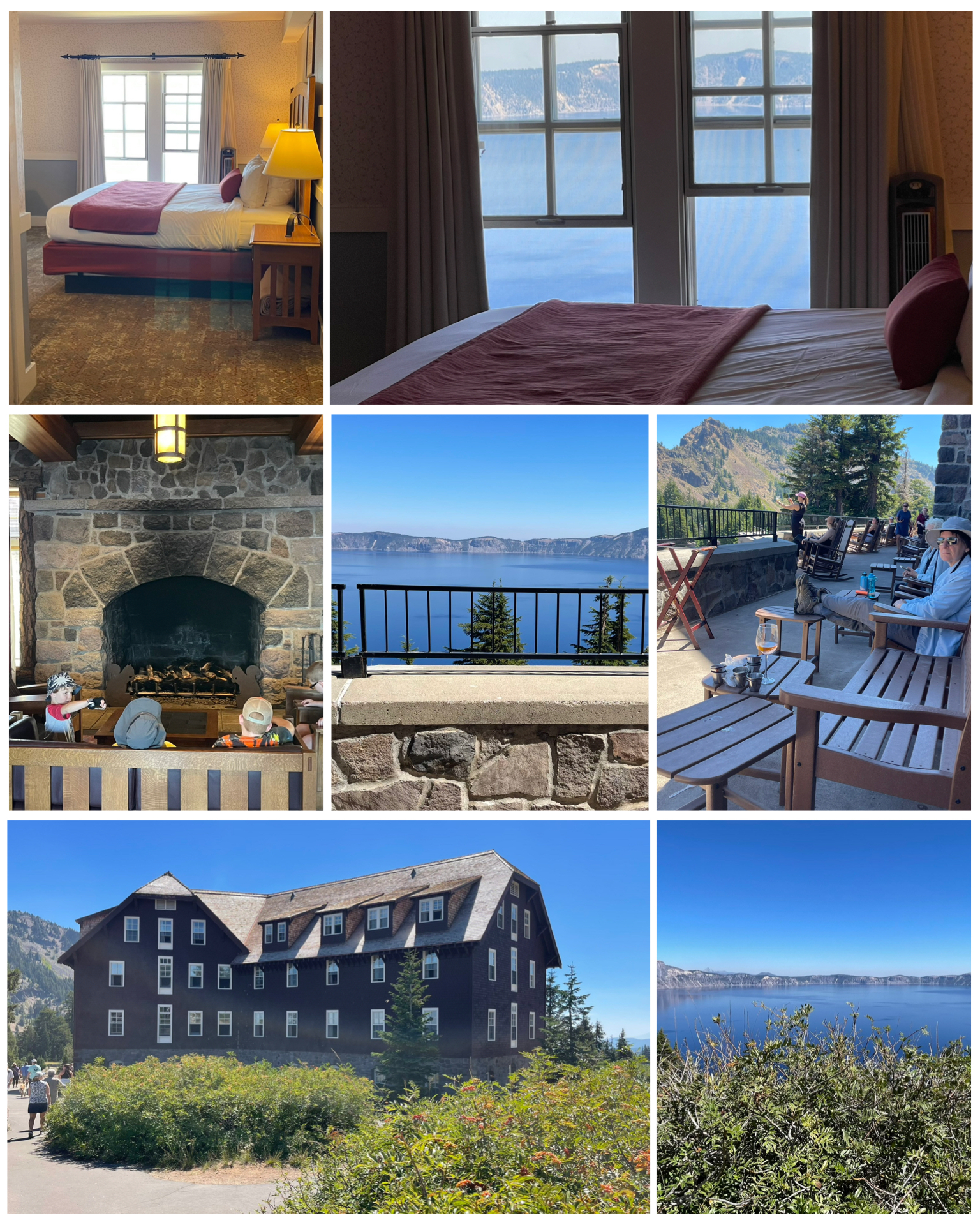 Also on the property was the Crater Lake Lodge. The hotel, built in 1915, is owned and operated by the National Park Service, and provides breathtaking views to the lake some 1000 feet below. There was a nice front sitting area (at left, center right) with rocking chairs to sit and admire the amazing view (at left center). They also had a terrific restaurant where I enjoyed a nice early afternoon lunch. After lunch, I walked around the hotel a bit to see a ginormous fireplace that I would imagine in the cold winter months would be blazing with warmth. There was a stairway that led to who knows where, so I walked up to see what was there. Turns out, it just leads to the hotel rooms. But as luck would have it, one of the rooms was open and being serviced by the cleaning crew, and offered a glimpse of the inside (at left, top left), along with with the amazing view from the room itself (at left, top right). Room rates seem to range from $245 to $345 per night – which given the location and views, seems pretty reasonable. Overall, it was an amazing day exploring this absolutely beautiful lake and National Park. If it’s not already there, this is a must see on your bucket list.
from the iPhone pictures and short videos I took while exploring Crater Lake, I put together this little montage video. I hope you enjoy it!
Final Thoughts
 Well, this was my first time ever exploring Oregon, and I must admit I was oh so pleased to do so. From the busy and hectic lifestyle of Portland, to the more laid back charm of the smaller towns and seaside life, to the absolute rural desolate beauty of the mountainous western area, Oregon certainly has it all and did not disappoint. I’m sure there is way more to be seen and experienced in the state, but alas my time has come to an end and I need to head south to begin my exploration of California. I’ll spend the next five weeks working my way through the state, taking in both the eastern and western portions, and visiting the many national parks that are represented here. When that tour is complete, I will begin my roughly four week mad dash trek to the east, working my way back to my Florida home base to hunker down for the winter. It’s amazing how much ground I’ve covered so far, and just how quickly time has passed as I’ve done so. Summer is nearly over and the cooling weather is quickly approaching. I’ve got family to see and lots to experience while in Cali, and I’m certainly looking forward to doing so. Till next time, be well and safe travels.
I only show a sampling of my adventure pictures here in the blog, and do so mostly in collage format for brevity and ease of reading. If you want to view an album containing individual full fidelity and hi-res images of all my travel pictures related to this specific blog, click the image below. Enjoy!

I love Haystack rock in the fog, those are awesome photos! It’s pretty sizeable when you walk up to it and the tide is out. Looks like a great trip/adventure. I’ve only been there once, and was amazed how different it is politically and environmentally from California. I love the beaches in OR.
– Dani (Gordon and Joan’s daughter)
Hi Dani,
Nice to hear from you. The fog at Cannon Beach was certainly unexpected, but as I’ve come to realize, not that uncommon. It certainly showed the beach in a different light. I really enjoyed myself touring through Oregon. So much to see and experience, and I only scratched the surface. I might need to come back. Hope all is well with you in Cali.
Too bad about your Cannon Beach visit being fogged out, it truely is a nice beach. The animals at the Mount Angel Abby wre really strange, are they real? I liked the story about Bobbie the wonder dog, Amazing what that dog accomplished. Was nice seeing you at Nicoles and glad you got to neet Chris. I watched his PBS documentary and it was interesting. Your visit to Crater Lake was better then Cannon Beach, at least you had some great weather to see it. I went there years ago with the family and Mom for a visit. Have fun in CA, I am sure you will be happy when you leave the west coast gas prices.
Yea the beach was definitely different in the fog. But fun none the less. I’m pretty sure all the stuffed animals in the Abbey museum were legit, and supposedly were from their own farm. Definitely creepy! Crater Lake was amazing. No fog there! See ya in Nov.
Great blog Bruce….wow!! Great stories and beautiful scenery. Crater Lake is amazing. and I’m sorry it was foggy on your day at Haystack Rock. But you sure made the best of it!! So many great roadside attractions and gorgeous scenery. Oregon is indeed beautiful.
You know me too well and my love of dogs…I thoroughly enjoyed the story of Bobbie the wonder dog. What a beautiful and faithful boy. Thank you for posting the You Tube link. The story reminded me a bit of the Disney movie The Incredible Journey with the 2 dogs and a cat travelling 300 miles home. But Bobbie….2500 miles…amazing. Good stuff!! Proves the saying “a dog is the only creature on earth where loves you more than he loves himself”.
Enjoy your travels thru California. If you find any more amazing dog stories send them my way. Happy trails and safe travels.
I’m glad you enjoyed the Bobbie story – figured you would. It sure was an incredible adventure. I’ll keep an eye out for other interesting dog stories to share. So far, I’m enjoying my travels through California. Lots to see here too. Hope all is well back in FL.
Yes Crater Lake is great and I believe mom visited there and really liked it. I agree that the water is spectacular. You saw a lot more of Oregon than I did. It was great following your blog about the sites.